
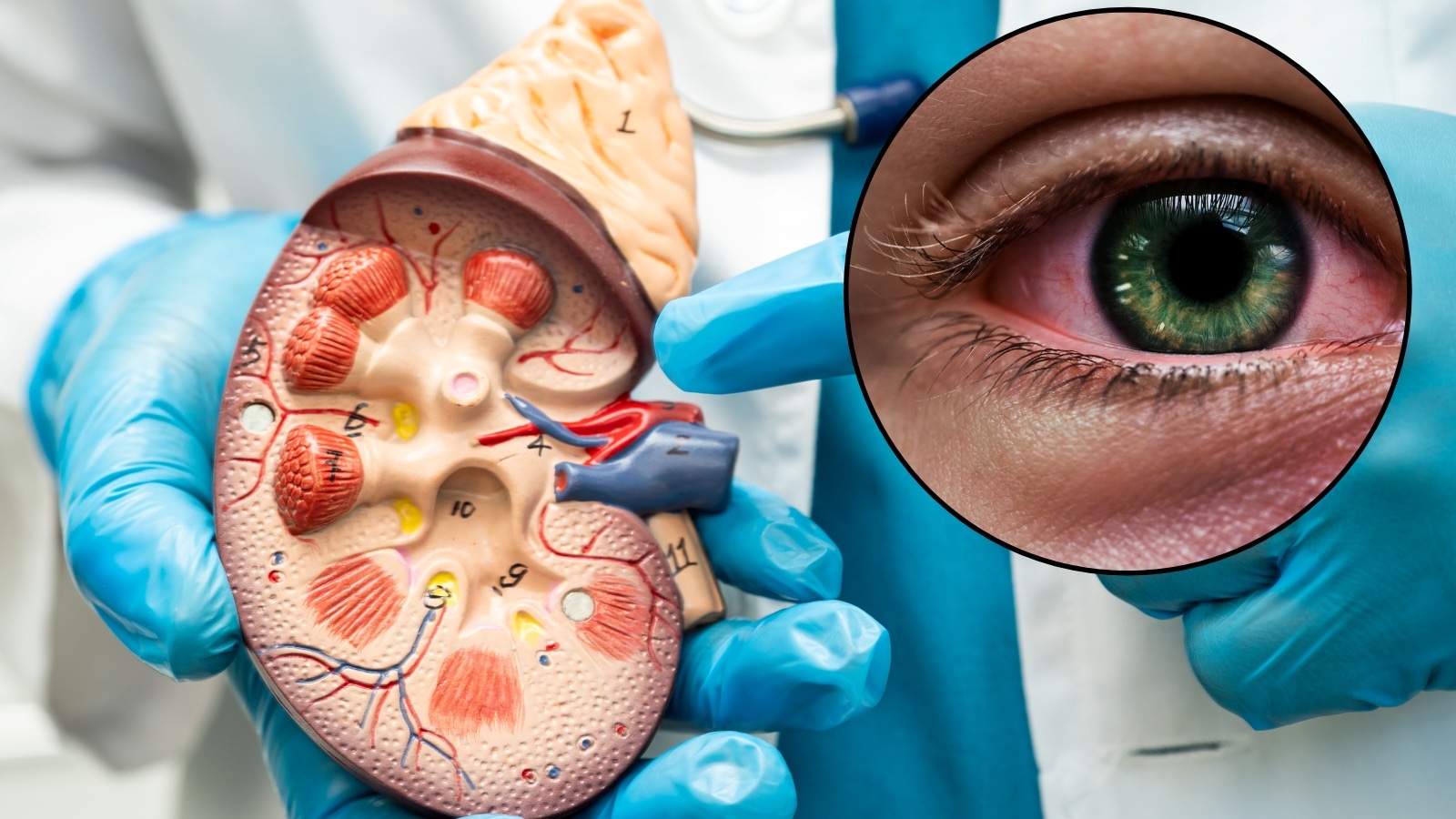
Sometimes, the body sends warning signals in the most surprising ways. For one woman, what began as a minor issue with her eyes led to a life-changing diagnosis of kidney failure. She shared her story online, writing, “The one thing I have learned is to never ask the universe, ‘What’s the worst that could happen?’ because trust me, the universe has a twisted sense of humor. It’ll hit you with a reverse UNO card and say, ‘Yeah, this is what can happen.’”
Her symptoms were subtle at first—blurred vision, a heaviness in her eyelids, and puffiness around her eyes. “I thought it was something simple, maybe I just needed a new power in my glasses,” she says. But curiosity, or perhaps fate, prompted her to see an ophthalmologist. What she expected to be a quick checkup turned into a startling revelation.
“After a few tests, my doctor looked at me and said something that didn’t even make sense at first—that my kidneys were failing,” she recalls. Within days, she was admitted to the hospital, undergoing blood tests, scans, and hearing unfamiliar terms like “creatinine,” “urea,” and “end-stage kidney disease.”
How can early kidney disease show up through eye or vision symptoms?
Dr Kavita Parihar, Director of Renal Transplant at Apollo Hospitals, Ahmedabad, explains, “Early kidney disease may present with symptoms such as swelling or puffiness around the eyes, a feeling of heaviness in the eyelids, and visual disturbances, including blurred vision or even partial vision loss. In diabetics and hypertensive patients, changes in the fundus are observed.”
She emphasises that these eye symptoms can sometimes serve as the first sign of a deeper problem, particularly in people with conditions like diabetes or high blood pressure.
What’s the biological link between kidney dysfunction and eye problems?
The connection lies in the body’s intricate network of blood vessels. Dr Parihar says, “Kidney dysfunction is closely tied to conditions like high blood pressure and diabetes. When these conditions are uncontrolled, they damage the small blood vessels throughout the body—including those in the eyes.”
She continues, “Elevated blood sugar or high blood pressure can cause swelling of the optic nerve and retinal blood vessels, leading to blurred vision, puffiness around the eyes, or even retinal bleeding if the vessels become too fragile and burst. When the kidneys can’t filter properly, waste products and excess fluid accumulate in the body, contributing to swelling, including around the eyes, and further increasing pressure on delicate eye structures.”
 When high blood pressure and diabetes are uncontrolled, they damage the small blood vessels throughout the body, including those in the eyes
Which eye symptoms suggest advanced kidney disease?
Persistent or severe vision changes may indicate more serious kidney involvement. According to Dr Parihar, “Symptoms such as persistent blurry vision, spotty vision, dark or black spots in the visual field, or significant vision loss can indicate more advanced eye involvement. When these symptoms appear, it may suggest that kidney disease has progressed to a more severe or advanced stage.”
Story continues below this ad
When should someone with vision problems get their kidney function tested?
Dr Parihar advises, “If someone experiences sudden or persistent vision problems, they should immediately check their blood sugar and blood pressure levels. If either of these is elevated—or if the vision issues persist—they should consult a kidney specialist immediately. Sudden or ongoing eye symptoms can be an early warning sign of underlying kidney dysfunction, so timely testing of kidney function is important.”
Reflecting on her experience, the woman adds, “There’s no way to describe that kind of shock—it’s like life paused and rewrote itself. I was told there was no reversing my condition, that I would need lifelong treatment, and that everything I knew about ‘normal’ was about to change.”
Her story underscores a vital lesson: even minor eye problems—such as blurred vision, puffiness, or subtle changes—can signal serious underlying health issues. Early detection, regular checkups, and prompt consultation with specialists can make a life-saving difference.
DISCLAIMER: This article is based on information from the public domain and/or the experts we spoke to. Always consult your health practitioner before starting any routine.

Leave a Reply