

Times of global uncertainty, like tensions between countries, an unstable economy, climate crisis, or health emergencies, can have a quiet effect on our mental health. To gain more insight on the subject, we reached out to Dr. Meenakshi Jain, Senior Consultant in Psychiatry at Amrita Hospital, Faridabad, and she said, “A lot of people today feel like they are always on edge, as if they are waiting for the next piece of bad news. As a psychiatrist, I often tell my patients that we can’t change what happens in the world, but we can learn to deal with it in better ways.” “Making a few simple mental habits can help you keep your emotions in check,” she continued.

Drawing boundaries
“Setting limits on news and social media is the first habit. The brain isn’t made to handle a steady stream of scary news. When people keep reading bad news, their brains start to think that the world is always dangerous. Limiting how often you check the news can help keep your mind clear. The second habit is to make your daily routine more stable. Routines become very important when things are uncertain. The brain knows it’s safe when you wake up, eat, work out, and go to bed at the same times every day. This helps lower anxiety,” she added.
Taking a pause
“We have to intentionally slow down and need to make this another important habit. It’s very crucial to take short breaks during the day. We should practice mindful breathing, stretching, or even a few minutes of silence. This can help calm the body’s stress response and keep us emotionally healthy. The fourth habit is to make connections with other people stronger. Anxiety often makes people feel alone, but talking to friends or family members you trust can help you feel better. Talking about your worries often makes them less strong,” Dr. Meenakshi stressed.
Understanding the controllables and uncontrollables
“Finally, it’s important to pay attention to what you can control. Instead of worrying about big world events, focus on your own health, meaningful work, and doing nice things for others. These actions give people back their sense of control,” she concluded.
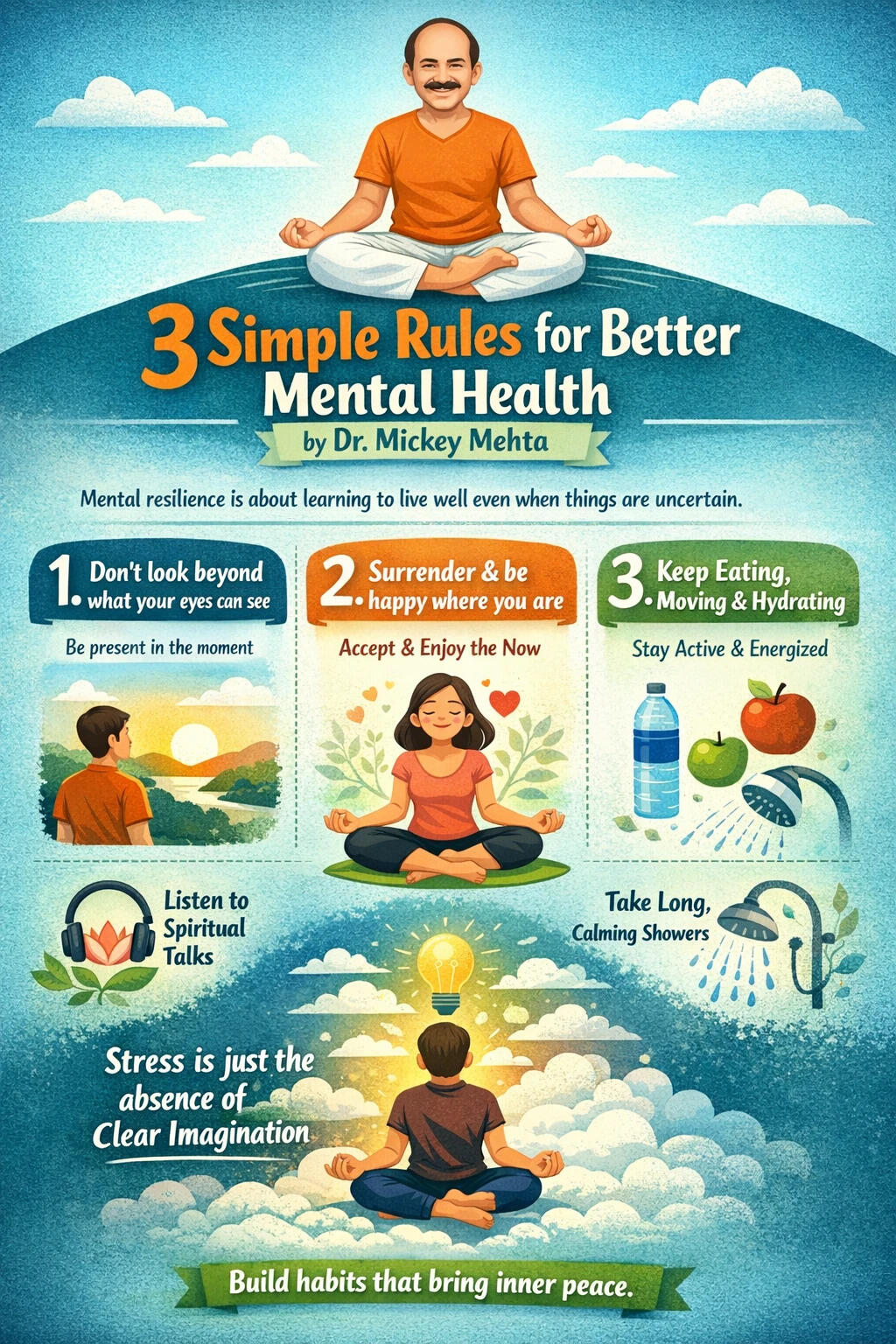
3 simple rules for a better mental health by Dr. Mickey Mehta
Holistic health guru, Dr. Mickey Mehta, said, “Rule number one should be that you don’t look beyond what your eyes can see. Rule number 2: We must just surrender to where we are and be happy about what we are doing. Rule number 3, whatever may be the threat perception, don’t stop eating, don’t stop moving, don’t stop hydrating, and doing your exercise.”“Listen to as many spiritual things as possible. Take long showers to keep your aura calm and clean. Stress is nothing but an absence of clear imagination,” he added. Mental resilience isn’t about pretending that things are certain; it’s about figuring out how to live well even when things aren’t. When people consciously build these habits, they feel calm on the inside even when the outside world seems unpredictable.Medical experts consulted This article includes expert inputs shared with TOI Health by: Dr Mickey Mehta, Holistic health guru.Dr. Meenakshi Jain, Senior Consultant in Psychiatry at Amrita Hospital, FaridabadInputs were used to explain how certain daily mental health habits can help individuals stay calm and emotionally resilient during periods of global uncertainty, while highlighting practical strategies that support stress management and overall psychological well-being.

Leave a Reply