

3 min readNew DelhiFeb 11, 2026 01:58 PM IST
Gynaecologist Dr Priya S P Patil took to her Instagram recently to show a chest x-ray of a woman who came for surgery as the ‘back of her nose pin’ got lodged in her lung. She mentioned, “Women who wear nose pins, be careful”. “Let me show you something unusual. A chest X-ray of a woman who had come to us for surgery. It is the back of her nose pin that got loose, and she inhaled it. It has gone and lodged in her lung,” she said in the video.
In the caption, she added: “A surprising discovery — the back of a nose pin found lodged deep in the lung, yet causing no current symptoms! While the patient is asymptomatic, such foreign bodies can pose serious risks over time — including infection, airway obstruction, or inflammation. A reminder that even small objects can silently travel and settle in unexpected places. Stay alert, especially with small accessories around kids or while sleeping.”
How can something like a nose pin enter the lung without obvious symptoms?
Small objects can sometimes slip into the airway while talking, coughing, laughing, or even while adjusting jewellery, noted Dr Manas Mengar, a consultant pulmonologist at KIMS Hospitals, Thane.
“If the object is tiny, it may not immediately block breathing. Some people may feel mild throat discomfort or a brief cough that settles quickly, making the incident easy to miss,” said Dr Mengar.
What symptoms can suggest a foreign object in the lung?
Symptoms vary, said Dr Mengar, adding: “Some people might develop a persistent cough, chest discomfort, wheezing, or frequent chest infections. Others may feel fine for weeks or months. In rare cases, the object is discovered incidentally during imaging for another reason, just like in this situation.”
Story continues below this ad
Why is it risky to leave a foreign object inside the lung?
According to Dr Mengar, over time, such objects can irritate the airway lining. “This may lead to infections, lung inflammation, bleeding, or difficulty breathing. Metallic items can also cause local tissue damage if not removed quickly.”
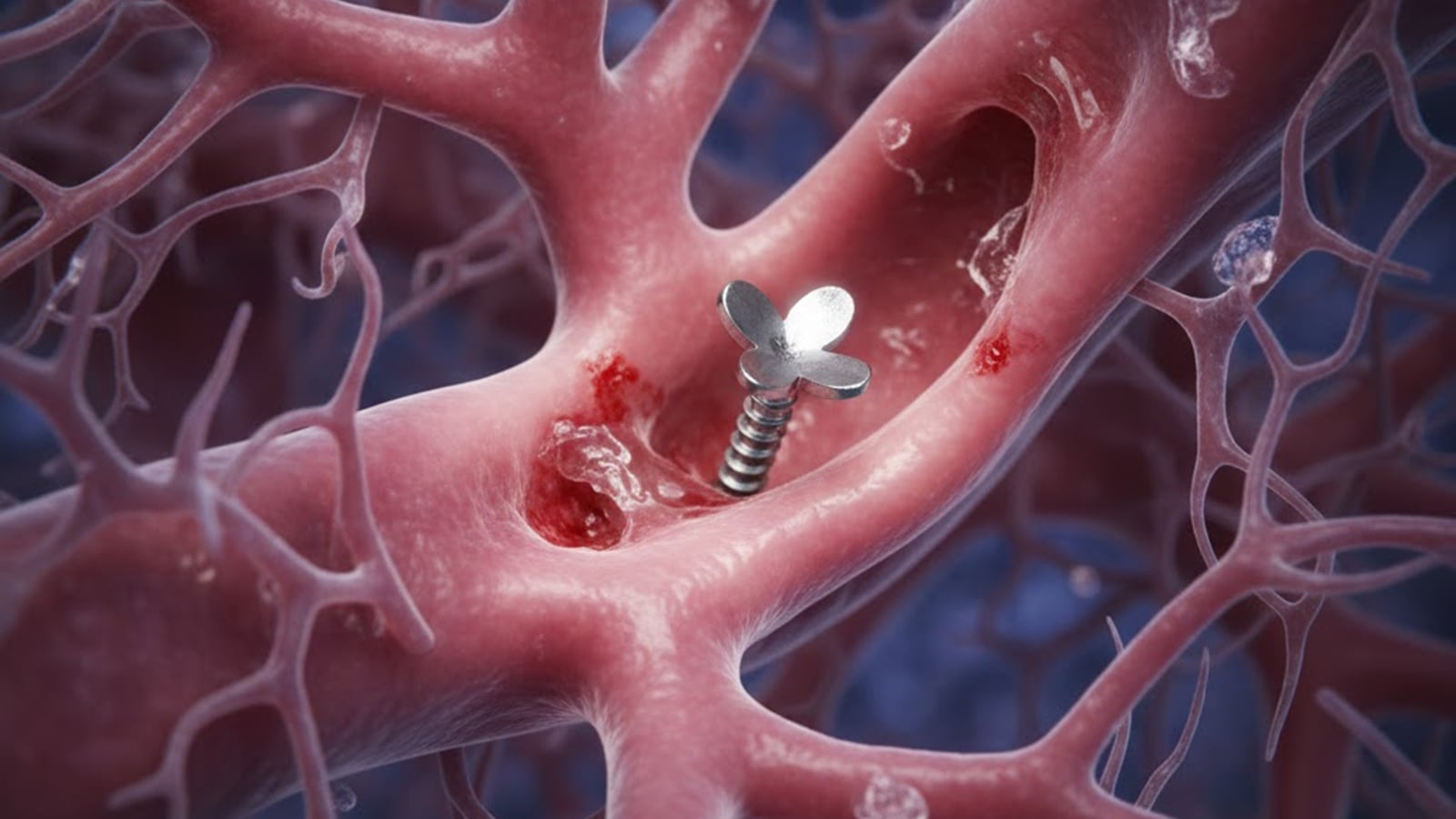 You may not experience symptoms (Photo: AI Generated)
How are such objects usually removed?
Most cases are managed via bronchoscopic procedures, according to Dr Mengar. “A thin tube with a camera is passed into the airway to locate and safely remove the object. This avoids open surgery and allows for faster recovery when done on time.”
What to note?
Story continues below this ad
Loose nose pins, earrings, or small accessories should be checked regularly. “It’s also best to avoid adjusting jewellery while lying down or during sudden movements. Using secure fittings and being cautious during sleep or physical activity can lower the risk,” said Dr Mengar.
Unusual breathing symptoms or a persistent cough should not be ignored, even if they seem minor. “Everyday objects can sometimes enter the airway silently. Timely checks can prevent serious complications later,” said Dr Mengar.
DISCLAIMER: This article is based on information from the public domain and/or the experts we spoke to. Always consult your health practitioner before starting any routine.

Leave a Reply