
Kitchen sponges are among the most commonly used cleaning tools in households, but a recent social media claim suggests they may also pose a hidden health risk. In a reel, nutrition coach Ryan Fernando warned that the kitchen sponge used to wash dishes could act as a “silent killer” because it accumulates harmful bacteria.
He explained that when people wash utensils that have come into contact with raw chicken or vegetables, the sponge can absorb pathogens. If not cleaned properly, the same sponge may spread bacteria to other dishes or kitchen surfaces. In extreme situations, he suggested, infections caused by such bacteria could even lead to serious complications.
DISCLAIMER: This article is based on information from the public domain and/or the experts we spoke to. Always consult your health practitioner before starting any routine.
To understand how accurate this claim is, we spoke to Senior Consultant Dr Vineeta Singh Tandon, Internal Medicine, ISIC Multispecialty Hospital.
Why kitchen sponges can harbour bacteria
According to Dr Tandon, the concern about bacteria growing in kitchen sponges is valid. “Yes, this is true. Kitchen sponges are wet and tend to be frequently in contact with food particles, which contributes to the fact that they provide bacteria with an ideal habitat,” she says.
Since sponges are used multiple times a day and often remain moist, germs can multiply quickly. “A kitchen sponge used may harbour thousands or millions of bacteria,” she explains, adding that warm and humid conditions allow germs to grow rapidly.
If a sponge is not cleaned or replaced regularly, it can spread microbes rather than remove them.
Story continues below this ad
Can sponges spread bacteria from raw foods?
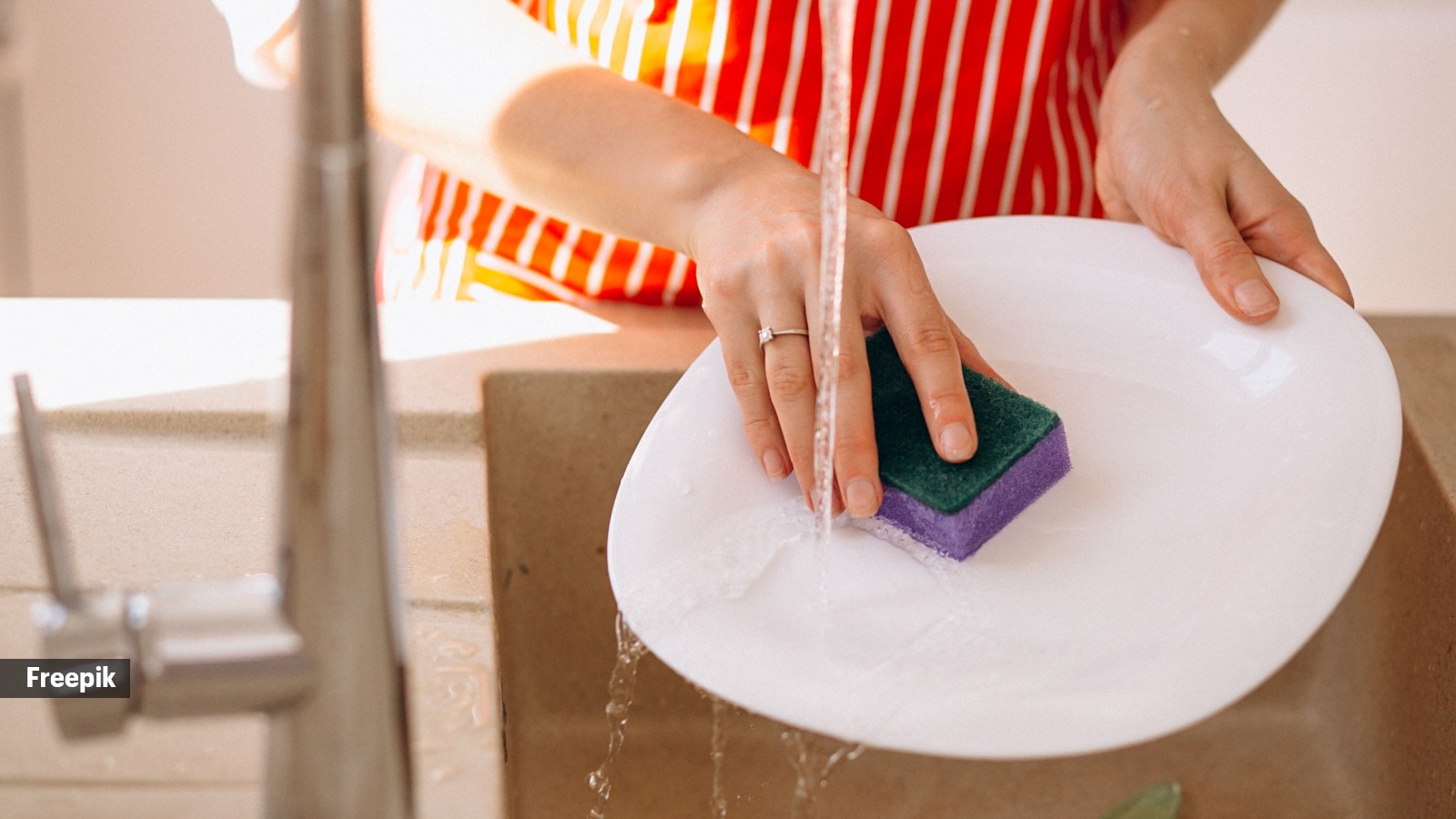
 Bacteria from contaminated kitchen sponge may cause mild food poisoning symptoms such as vomiting, diarrhoea or stomach cramps (Image: Freepik)
Another concern is cross-contamination when washing utensils that have come in contact with raw food.
Dr Tandon explains that bacteria such as Salmonella or Escherichia coli may be present in raw chicken, seafood or unwashed vegetables.
“As a sponge comes in contact with such surfaces, then the bacteria may stick to the sponge and then be transported to other utensils, plates, or kitchen counters,” she says.
This process—known as cross-contamination—can increase the risk of foodborne illness if proper hygiene is not maintained.
Story continues below this ad
Does microwaving or boiling the sponge help?
Many people try to disinfect sponges by microwaving them or placing them in boiling water. While these methods can reduce bacteria, they may not completely eliminate all germs.
“Heat will kill a large number of microorganisms. When the sponge is extremely dirty, then some bacteria might survive,” Dr Tandon says.
She suggests microwaving a wet sponge for about a minute or soaking it in very hot water to reduce the bacterial load.
How often should you replace your sponge?
Cleaning and replacing sponges regularly is key to maintaining kitchen hygiene.
Story continues below this ad
Dr Tandon recommends washing or disinfecting the sponge frequently and replacing it every one to two weeks, depending on how often it is used.
“If the sponge has acquired a bad odour or appears worn out, then it must be thrown away,” she says.
Can bacteria from sponges cause serious illness?
In most cases, bacteria from contaminated kitchen tools may cause mild food poisoning symptoms such as vomiting, diarrhoea or stomach cramps.
However, in rare cases—especially among elderly people, children or those with weak immunity—foodborne infections caused by bacteria like E. coli or Salmonella can lead to more serious complications affecting organs such as the kidneys.
The risk can be significantly reduced by keeping the kitchen clean, replacing sponges regularly and practising safe food handling.
Story continues below this ad
DISCLAIMER: This article is based on information from the public domain and/or the experts we spoke to. Always consult your health practitioner before starting any routine.

Leave a Reply