
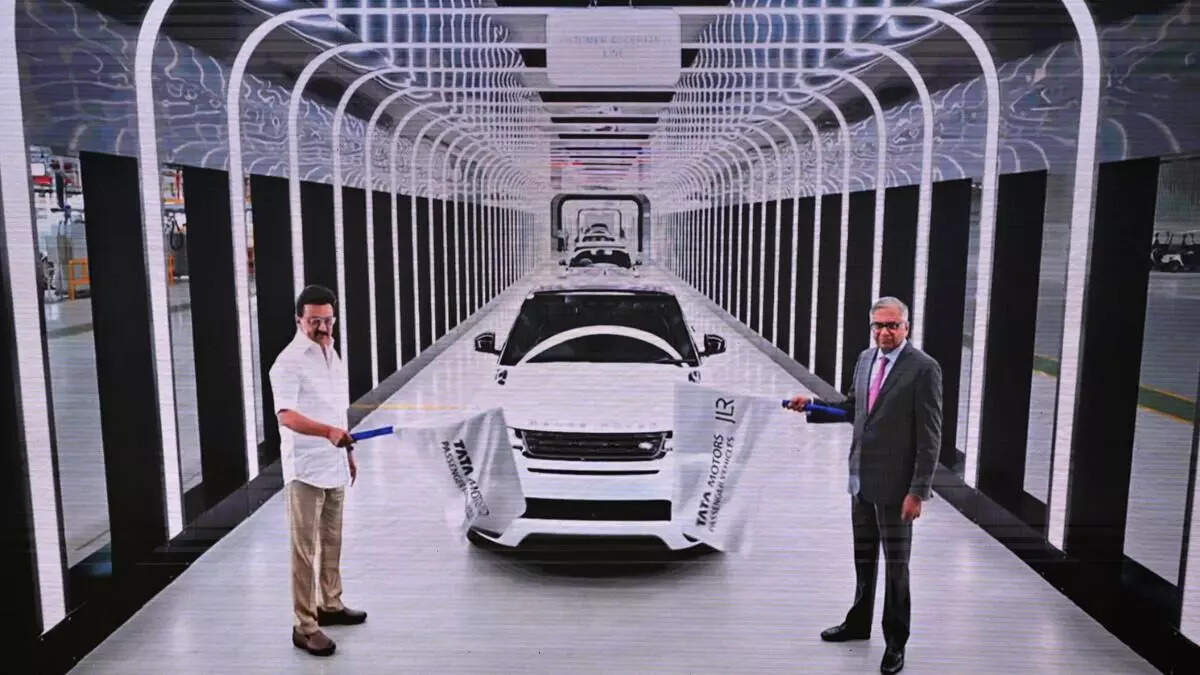
Tamil Nadu has solidified its standing as a global manufacturing hub with the inauguration of the Tata Motors–Jaguar Land Rover (JLR) passenger vehicle manufacturing facility in Ranipet. This significant industrial project underscores the state’s growing confidence in attracting international investments. Chief Minister M. K. Stalin stated that Tamil Nadu is now competing with nations, not just other Indian states, for global capital. The new facility demonstrates the state’s capacity to host world-class manufacturing and produce globally competitive products, which he attributed to the state’s “Dravidian model” of governance.The inauguration ceremony took place in Panapakkam village, Ranipet district. The event marked the official commencement of operations with the rollout of the first Range Rover Evoque manufactured at the site. This moment signifies Tamil Nadu’s entry into large-scale luxury vehicle production.
The Chief Minister emphasized the trust global investors place in the state government’s commitments. He highlighted the rapid execution of the project, noting that the plant became operational in just over a year, a pace significantly faster than typical timelines for large automobile manufacturing projects.
This swift completion of the Ranipet plant exemplifies the ease of doing business in Tamil Nadu, according to the Chief Minister. He pointed to streamlined approvals, transparent governance, robust infrastructure, a skilled workforce, and a peaceful business environment as key factors attracting global manufacturers. To sustain this momentum, the government announced plans for a conclave to showcase schemes designed to simplify business operations and accelerate industrial investments across various sectors.
N. Chandrasekaran, Chairman of Tata Sons and Tata Motors Passenger Vehicles Ltd., described the Ranipet facility as a significant milestone in the company’s pursuit of future-ready and sustainable manufacturing. He noted that this is the first car manufacturing unit in the district. The plant integrates advanced production technologies with a highly skilled workforce to produce premium vehicles.
He also underscored the Tata Group’s extensive and long-standing partnership with Tamil Nadu. This collaboration spans multiple industries, including information technology, hospitality, power, electronics, and consumer goods. The new JLR facility further strengthens this relationship, reflecting shared objectives of industrial excellence and inclusive growth.
The Ranipet plant, spread over hundreds of acres, is designed for phased production scaling. It is projected to reach an annual capacity of approximately 250,000 vehicles. These vehicles are intended for both domestic and international markets, establishing Tamil Nadu as a crucial component of Jaguar Land Rover’s global manufacturing network.
The project is anticipated to create over 5,000 direct and indirect jobs. It will also contribute to skill development within the region. Furthermore, it will support a broad ecosystem of suppliers, logistics providers, and service industries.
In a symbolic gesture highlighting the enduring connection between the state and the Tata Group, the Chief Minister unveiled a bust of Ratan Tata at the plant premises. This tribute acknowledged the group’s legacy of nation-building and its historical contributions to industrial development in Tamil Nadu.
Senior ministers and officials attended the inauguration, underscoring the strategic importance the state government places on high-value manufacturing investments. The Ranipet JLR plant serves as a concrete illustration of Tamil Nadu’s industrial aspirations, combining rapid execution, policy support, and global collaboration.
By hosting luxury automobile manufacturing and completing such a substantial project in record time, Tamil Nadu has signaled its intent to actively partner with global corporations. This collaboration aims to shape the future of advanced manufacturing. The Ranipet facility represents more than just an industrial unit; it stands as a testament to the state’s confidence and capabilities on the global stage.
M. K. Stalin, Chief Minister of Tamil Nadu, asserted that the state has moved beyond competing with other Indian states and is now positioning itself alongside nations in attracting global capital. He described the new facility as proof of Tamil Nadu’s ability to host world-class manufacturing units and deliver globally competitive products, crediting this success to what he termed the state’s “Dravidian model” of governance.
Speaking at the inauguration, N. Chandrasekaran, Chairman of Tata Sons and Tata Motors Passenger Vehicles Ltd., described the Ranipet facility as a major milestone in the company’s journey toward future-ready and sustainable manufacturing. He noted that the plant is the first car manufacturing unit in the district and combines advanced production technologies with a highly skilled workforce to deliver premium vehicles.
He also emphasised the Tata Group’s deep and long-standing partnership with Tamil Nadu, which spans multiple industries including information technology, hospitality, power, electronics, and consumer goods. The new JLR facility further strengthens this relationship and reflects shared goals of industrial excellence and inclusive growth.
The Chief Minister highlighted the trust global investors place in the state government’s assurances, noting that commitments made to investors are being delivered consistently. He underlined the speed of execution as a major strength, pointing out that the plant became operational in just over a year—far quicker than the typical timeline for large automobile manufacturing projects.
Drawing comparisons with other recent high-profile industrial investments, the Chief Minister said the rapid completion of the Ranipet plant reflects the ease of doing business in Tamil Nadu. According to him, streamlined approvals, transparent governance, strong infrastructure, a skilled workforce, and a peaceful business environment have made the state an attractive destination for global manufacturers.
To build on this momentum, the government announced plans to host a conclave highlighting numerous schemes aimed at simplifying business operations and accelerating industrial investments across sectors.
Spread over hundreds of acres, the Ranipet plant is designed to scale production in phases and eventually reach an annual capacity of around 250,000 vehicles. These vehicles are intended for both domestic and international markets, positioning Tamil Nadu as a key node in Jaguar Land Rover’s global manufacturing network.
The project is expected to generate more than 5,000 direct and indirect jobs, while also contributing to skill development in the region and supporting a wide ecosystem of suppliers, logistics providers, and service industries.
In a symbolic gesture underscoring the enduring bond between the state and the Tata Group, the Chief Minister unveiled a bust of Ratan Tata at the plant premises. The tribute highlighted the group’s legacy of nation-building and its historic contribution to industrial development in Tamil Nadu.
The inauguration was attended by senior ministers and officials, reflecting the strategic importance the state government attaches to high-value manufacturing investments. The Ranipet JLR plant stands as a tangible example of Tamil Nadu’s industrial ambitions—combining speed of execution, policy support, and global collaboration.
By hosting luxury automobile manufacturing and delivering such a large project in record time, Tamil Nadu has signalled that it is not merely attracting investment, but actively partnering with global corporations to shape the next phase of advanced manufacturing. The Ranipet facility thus emerges not just as an industrial unit, but as a statement of the state’s confidence and capability on the global stage.


Leave a Reply