

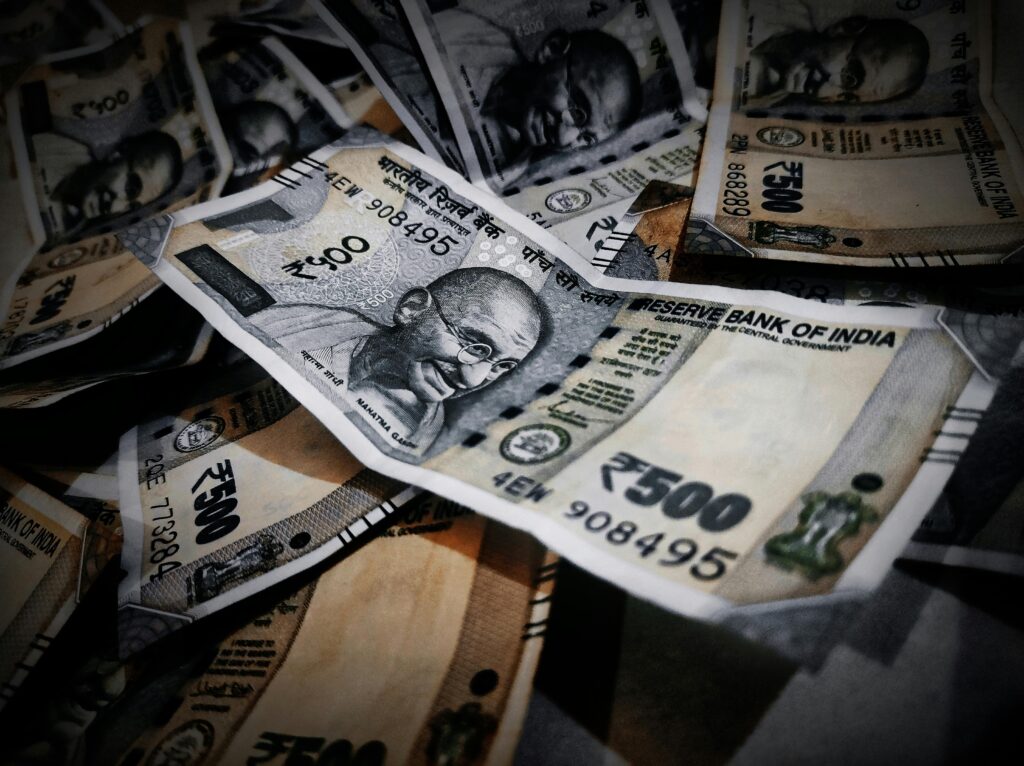
MUMBAI, 15 Dec 2025 — The Indian rupee weakened sharply to record lows against the U.S. dollar this week, extending a prolonged slide that has made it one of Asia’s weakest-performing currencies in 2025. The currency slipped past ₹90.70 to a dollar on Monday and touched intra-day levels near ₹90.80, surpassing earlier all-time lows as global and domestic pressures intensified.
🔎 Key Drivers of the Decline
• Deadlock in U.S.–India Trade NegotiationsUncertainty over a long-awaited U.S.–India trade agreement has emerged as a central factor weighing on investor sentiment and the rupee’s value. Talks between the two countries have stalled, with disagreements over tariffs and market access leading to protracted negotiations. The absence of a concrete framework has increased risk aversion among portfolio investors.
Persistent Foreign Capital Outflows
Foreign institutional investors (FIIs) have continued to pull money out of Indian equities and bonds, adding downward pressure on the currency. So far in 2025, foreign investors have sold over $18 billion worth of Indian stocks, with significant bond outflows reported in December alone.
• Export and Tariff Pressures
Higher tariffs on Indian goods destined for the U.S. market have dampened export prospects, further hurting the rupee’s outlook. These tariff barriers, some as high as 50 %, have reduced competitiveness and investor confidence in India’s trade performance.
📊 Recent Levels and Market Impact
The rupee closed around ₹90.74 per U.S. dollar on Monday after briefly trading near ₹90.80 — its lowest on record.
In recent sessions, the currency has fallen more than 5.5–6 % against the dollar year-to-date, highlighting persistent weakness.
Indian equity markets also reflected the stress, with both the Sensex and Nifty 50 declining amid risk-off sentiment tied to currency and trade uncertainties.
🏦 Reserve Bank of India’s (RBI) Role
The Reserve Bank of India has stepped in intermittently to stem sharper declines in the rupee by selling U.S. dollars into the market through state-run banks. Analysts say these interventions are intended to manage volatility rather than defend a specific exchange rate level.
Despite these efforts, the RBI appears to be allowing a measured depreciation in line with underlying economic trends, as external pressures and capital flows continue to influence market dynamics.
📌 Broader Economic Context
Economists note that the currency’s weakness has implications for inflation, import costs, and investor confidence. A weaker rupee makes imports — including essential commodities like crude oil — more expensive, potentially feeding into consumer prices.
Conversely, a lower currency value can make Indian exports more competitive in price terms, though this benefit is currently muted by trade barriers and global demand uncertainties.
📈 Looking Ahead
Market participants will be closely watching the progress of U.S.–India trade talks, expected to remain in focus through early 2026. Some government officials have suggested a potential resolution by March, which could ease pressure on the rupee if realized.
Until then, analysts anticipate that the rupee may continue to trade under pressure, with capital flows and trade developments likely to set the near-term direction for the currency.

Leave a Reply