
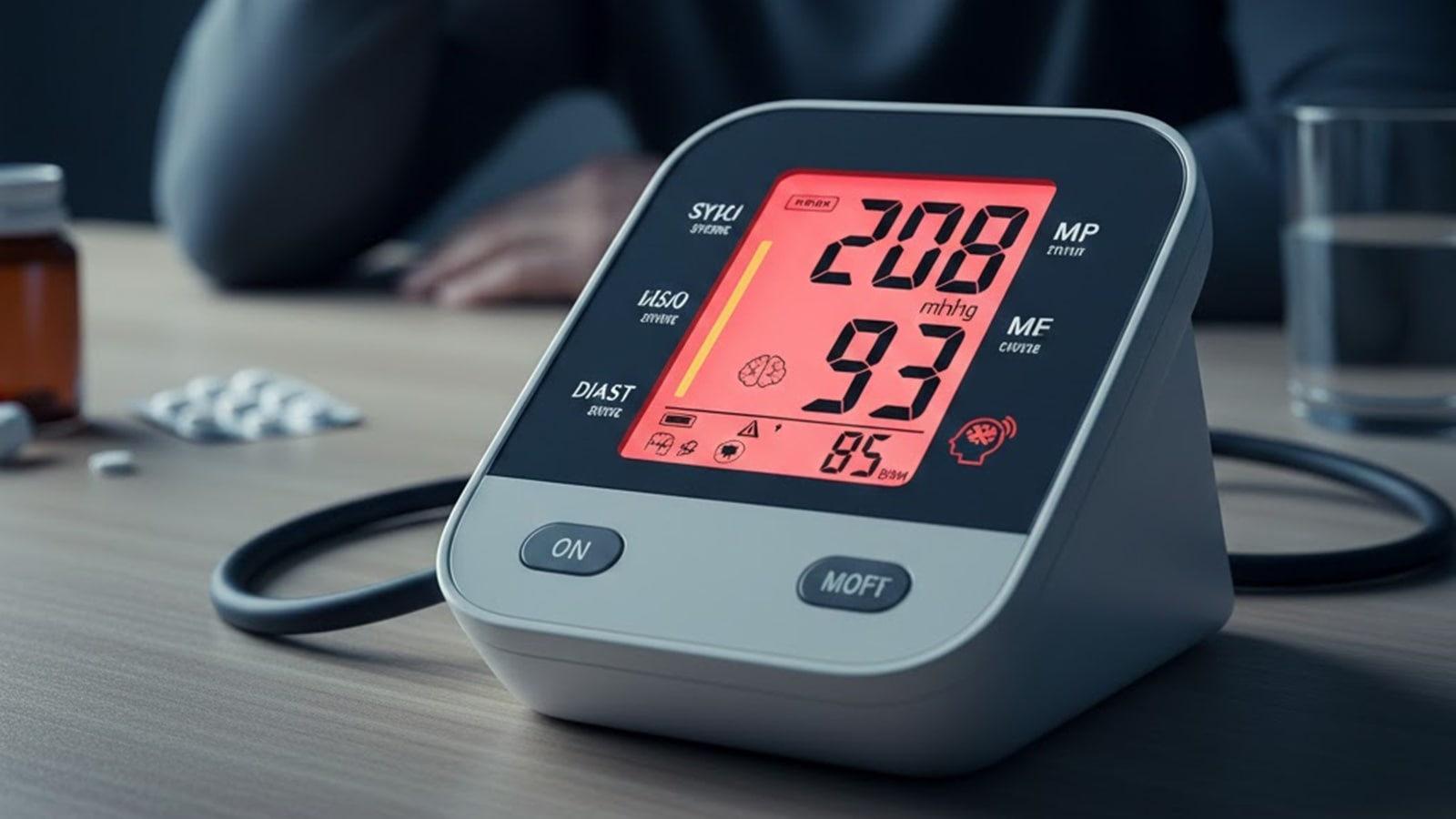
Given a blood pressure reading of 208/93 mmHg with an accompanying headache, what should one do? As this Quora query popped up in our feed, we decided to consult Dr Parin Sangoi, a consultant interventional cardiologist at Wockhardt Hospitals, Mumbai Central, who said that “Blood pressure readings above 180 on the upper number are a medical emergency. When such numbers appear, especially with symptoms like a headache, the body is under a lot of strain and needs immediate attention.”
Why does a severe headache occur with very high blood pressure?
Stressing that a headache can occur because high pressure affects blood flow to the brain, Dr Sangoi said, “Stress on blood vessels may trigger pain, pressure, or a throbbing sensation. While not every headache is linked to blood pressure, a strong or unusual headache with very high readings is a warning sign.”
Should this be treated as an emergency even if other symptoms are mild?
Yes, he affirmed. “Even if the headache is the only symptom, such a high reading should not be handled at home. Waiting for symptoms to get worse can increase the risk of serious complications that affect the brain, heart, kidneys, or eyes,” said Dr Sangoi.
 Here’s the Quora query (Photo: Quora)
What should be done immediately in this situation?
The person should seek emergency medical care right away. “This sort of high blood pressure needs supervised treatment and monitoring. Adjusting medications on your own, lying down, or waiting it out is not safe,” said Dr Sangoi.
Stress, missed blood pressure medications, too much salt, dehydration, pain, lack of sleep, or hormone-related issues can all contribute. In some cases, hormone balance problems can cause sudden spikes that are hard to predict.
What to avoid doing?
Avoid exertion, driving yourself, caffeine, smoking, and panic. “Also, do not take extra doses of medication unless advised by a healthcare professional,” said Dr Sangoi.
What to do after treatment?
Dr Sangoi described that once stabilised, more tests are usually needed to understand why the spike happened. “Long-term control depends on regular monitoring, following medication plans, managing stress, getting enough sleep, and making dietary changes.”
Story continues below this ad
DISCLAIMER: This article is based on information from the public domain and/or the experts we spoke to. Always consult your health practitioner before starting any routine.

Leave a Reply