
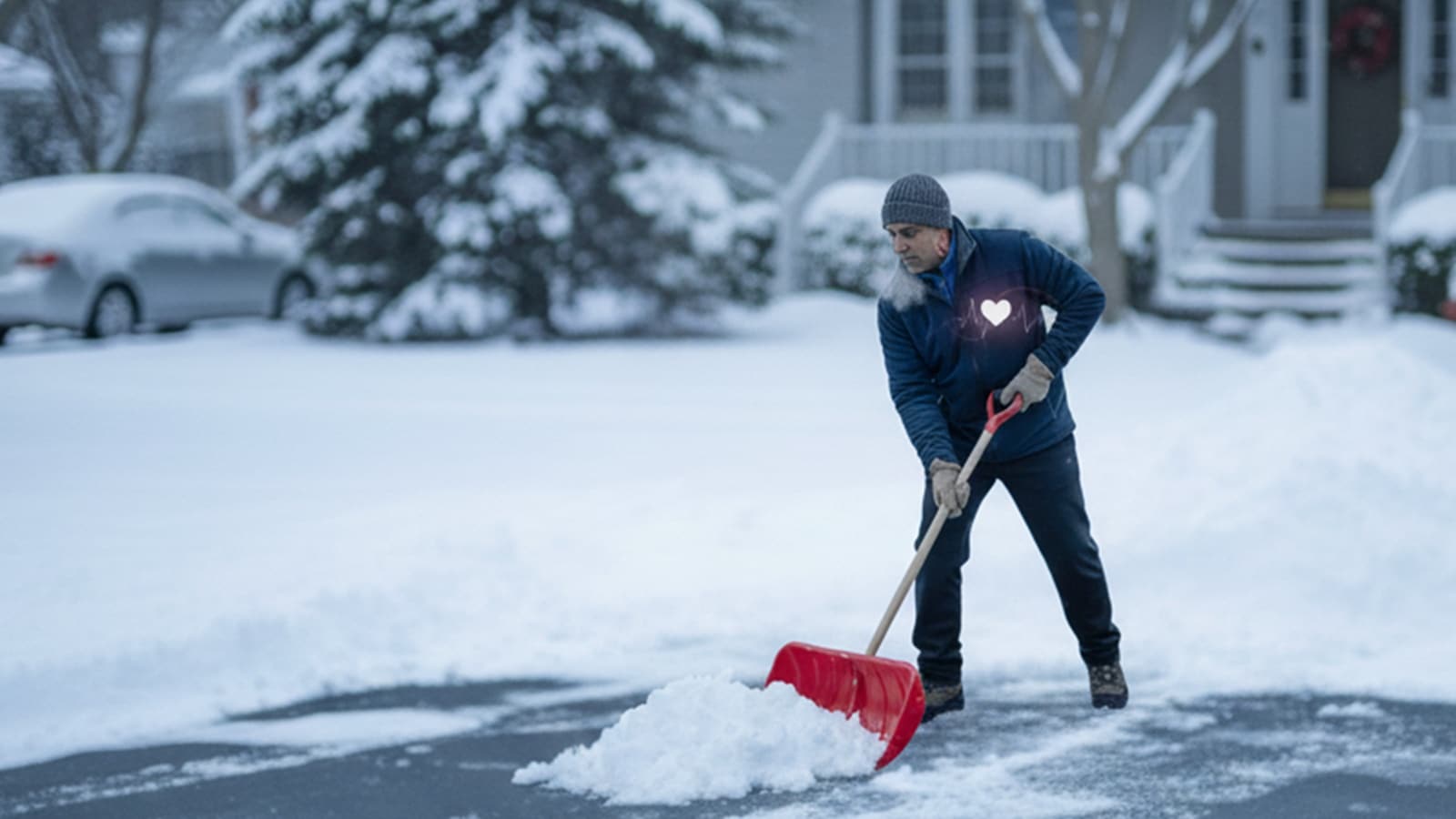
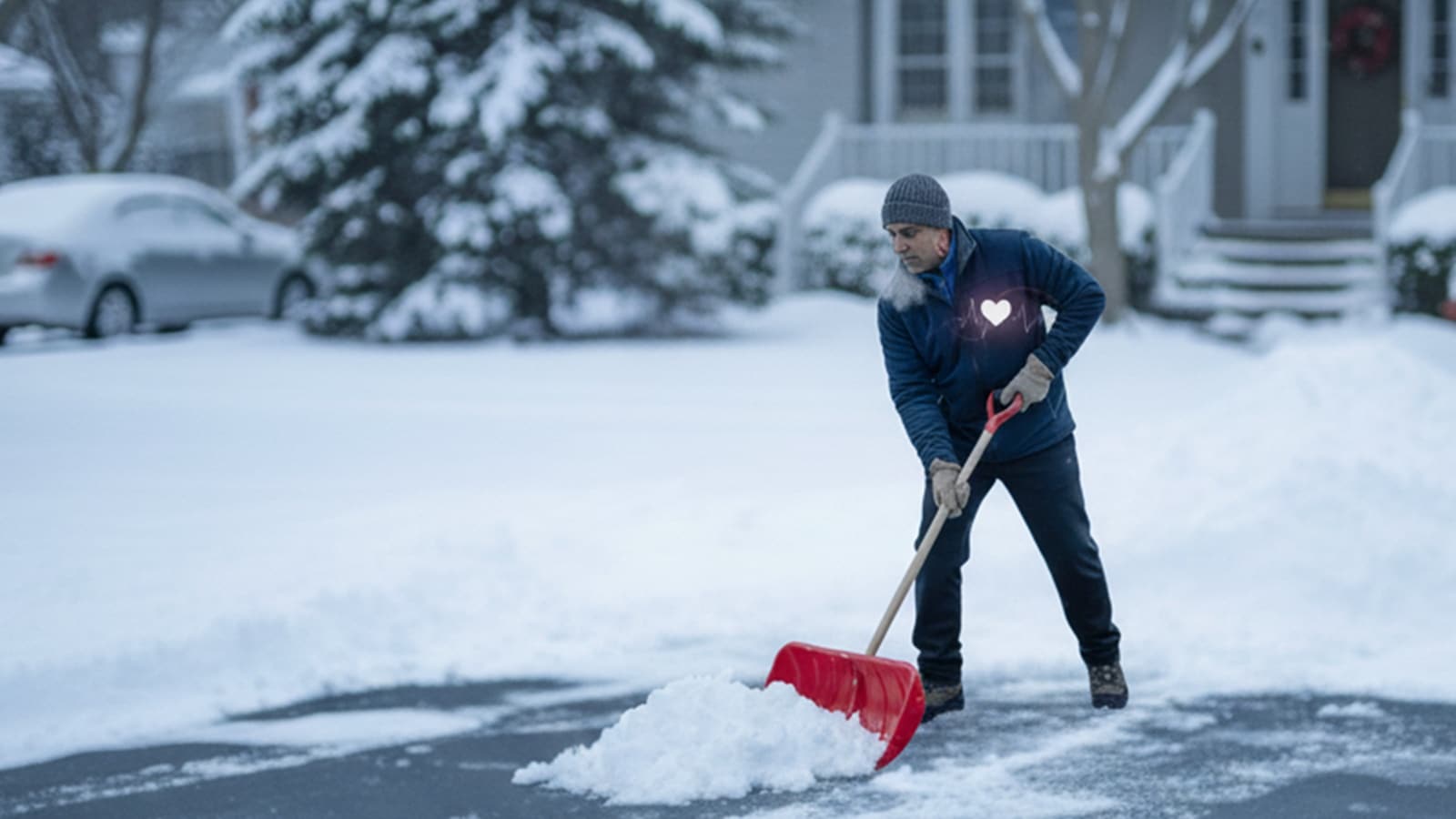
Snow-covered streets and driveways can make winter mornings look calm and almost inviting, but clearing that snow is anything but gentle on the body. Cardiologist and heart-transplant specialist Dr Dmitry Yaranov is drawing attention to why snow shovelling is considered one of the most dangerous winter activities for the heart. In an Instagram video, he explained that heart attacks related to snow shovelling tend to occur alarmingly quickly. “As a heart transplant cardiologist, I see this every winter. Most snow-shovelling heart attacks happen within the first 10 to 15 minutes – not because snow is magical, but because it’s the perfect storm,” he said.
According to Dr Yaranov, snow shovelling combines several high-risk factors: sudden exertion, cold-induced vasoconstriction, Valsalva manoeuvres induced by breath-holding during lifting, rapid spikes in blood pressure, and the fact that many people attempt it after months of minimal physical activity. Together, these factors can overwhelm the cardiovascular system before the body has time to adapt.
To reduce the risk, Dr Yaranov urges people to stop treating snow shovelling like a fitness challenge. “Don’t treat it like a workout. No rushing. No ‘I’ll just power through’,” he warns. He emphasises that the earliest phase is often the most dangerous, noting, “The first 10 minutes are the riskiest. That’s when demand spikes before your body adapts.” He also advises pushing snow instead of lifting it, explaining, “Lifting heavy, wet snow plus breath-holding equals BP surge. Push when you can.”
He further recommends engaging the legs rather than overloading the upper body and heart, advising people to “Bend at the hips and knees. Keep the load close. Avoid twisting.”
Why does snow shovelling place such sudden and severe stress on the heart?
Dr CM Nagesh, honorary secretary, Indian College of Cardiology and founder of Cardea Super Speciality Hospital, tells indianexpress.com, “Snow shovelling is uniquely dangerous because it combines intense physical exertion with cold exposure and awkward body movements. People often lift heavy, wet snow using upper body strength while holding their breath, which sharply raises blood pressure and heart rate within minutes.”
He adds, “Unlike routine household chores, this effort is sudden and unaccustomed, especially for people who are otherwise sedentary. In individuals with undiagnosed coronary artery disease, this rapid spike in cardiac workload can reduce blood flow to the heart muscle and trigger a heart attack, even if they feel generally fit.”
How cold weather changes the way the heart and blood vessels respond to physical exertion
Cold temperatures cause blood vessels to constrict to conserve body heat, Dr Nagesh states, which increases blood pressure and forces the heart to work harder to pump blood. At the same time, cold raises stress hormone levels, such as adrenaline, which increases heart rate and increases oxygen demand.
“When physical exertion is added, the heart may not receive enough oxygen-rich blood, particularly if arteries are already narrowed. This mismatch between demand and supply significantly raises the risk of chest pain, abnormal heart rhythms, or heart attacks during winter activities,” says the expert.
Story continues below this ad
Precautions people should take before attempting physically demanding tasks in winter
According to Dr Nagesh, people should avoid sudden bursts of heavy activity in cold weather and take time to warm up before starting any strenuous task. Tasks like snow shovelling should be broken into shorter sessions with frequent breaks, and lifting should be done in small loads rather than all at once.
“Dressing in layers helps prevent excessive cold stress on the body. Individuals with risk factors such as high blood pressure, diabetes, smoking history, obesity, or a family history of heart disease should be particularly cautious and consider avoiding heavy snow shovelling altogether. Any symptoms such as chest discomfort, breathlessness, dizziness, or unusual fatigue should be taken seriously and prompt immediate medical attention,” concludes Dr Nagesh.
DISCLAIMER: This article is based on information from the public domain and/or the experts we spoke to. Always consult your health practitioner before starting any routine.

Leave a Reply