
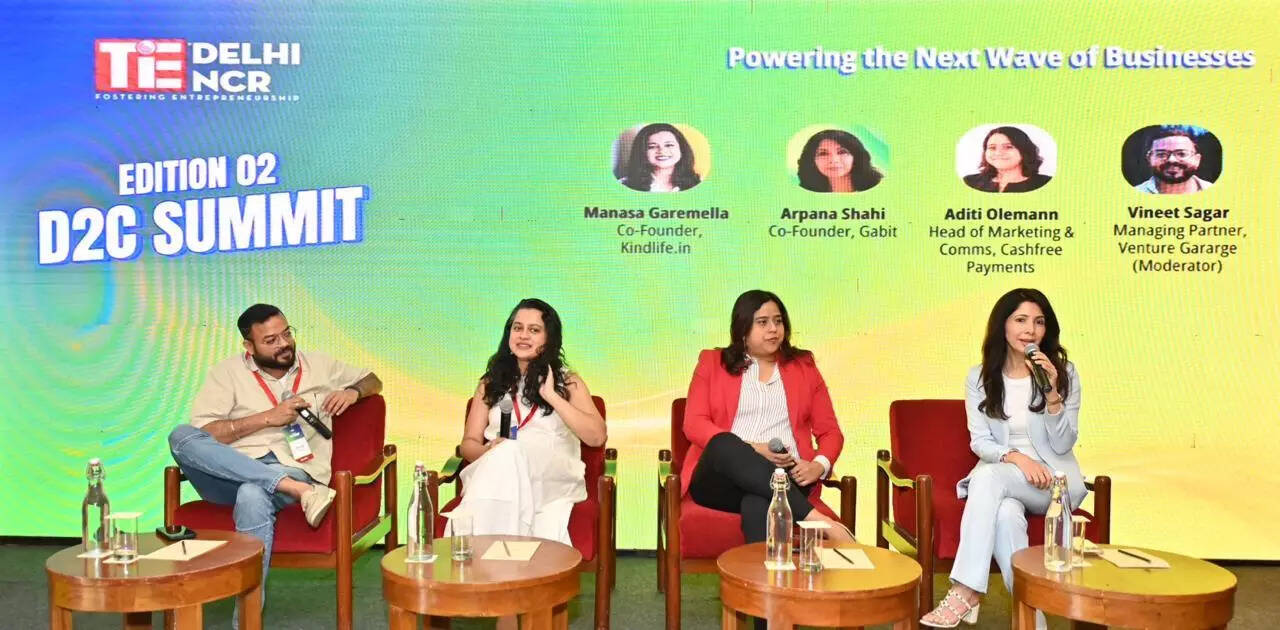
 At the second edition of TiE Delhi-NCR’s D2C Summit, which brought together over 300 founders, investors and ecosystem enablers, the mood was less about blitzscaling and more about building durable brands in what many described as a maturing consumer market.
India’s direct-to-consumer ecosystem is entering a more disciplined phase. The exuberance of 2021 has given way to sharper conversations around capital efficiency, distribution depth, and outcome-driven products, even as the broader market continues to expand fast.
At the second edition of TiE Delhi-NCR’s D2C Summit, which brought together over 300 founders, investors and ecosystem enablers, the mood was less about blitzscaling and more about building durable brands in what many described as a maturing consumer market.
“The consumer brand ecosystem is maturing a lot,” said Yash Dholakia of Sauce.vc, pointing to a string of IPOs and acquisitions in the space. Large outcomes, he noted, are reshaping how both founders and investors evaluate the sector. “Founders are ending up owning forty, fifty, sixty per cent at the time of exit, which is a meaningful capital outcome for them,” he told ETEntrepreneur.
That visibility of outcomes is drawing in new pools of capital. Beyond traditional venture funds, family offices are becoming increasingly active. According to Dholakia, this is largely positive for the ecosystem. Such capital can be more patient and flexible, backing businesses that may not fit a typical five-year venture return cycle.
At the same time, established funds such as Sauce and Fireside Ventures are expanding their strategies, with larger cheque sizes and follow-on vehicles to partner with brands across their lifecycle.
If capital is evolving, so is the consumer.
Arpana Shahi, founder of health and wellness platform Gabit, said Indian buyers are no longer satisfied with lofty claims. “Consumers are actually demanding results. They want products which can give you the result, and even if it’s slightly more money they need to pay for that, they’re willing to do that,” she said.
In categories such as preventive health, this shift is structural. Shahi argues that post-pandemic India is moving from a curative to a preventive mindset, creating what she calls an inflection point for longevity-focused brands.
This focus on measurable value echoed across panels at the summit. From checkout optimisation and payment intelligence to operational AI and open commerce, discussions centred on improving unit economics and conversion rather than simply driving top-line growth.
“Founders today are operating in a market where consumer expectations evolve faster than categories themselves. What emerged at this summit is a shared understanding that winning brands won’t just be digital-first, they will be culture-first, operationally disciplined, and technologically accelerated,” said Upasana Sharma, executive director, TiE Delhi-NCR.


Leave a Reply