
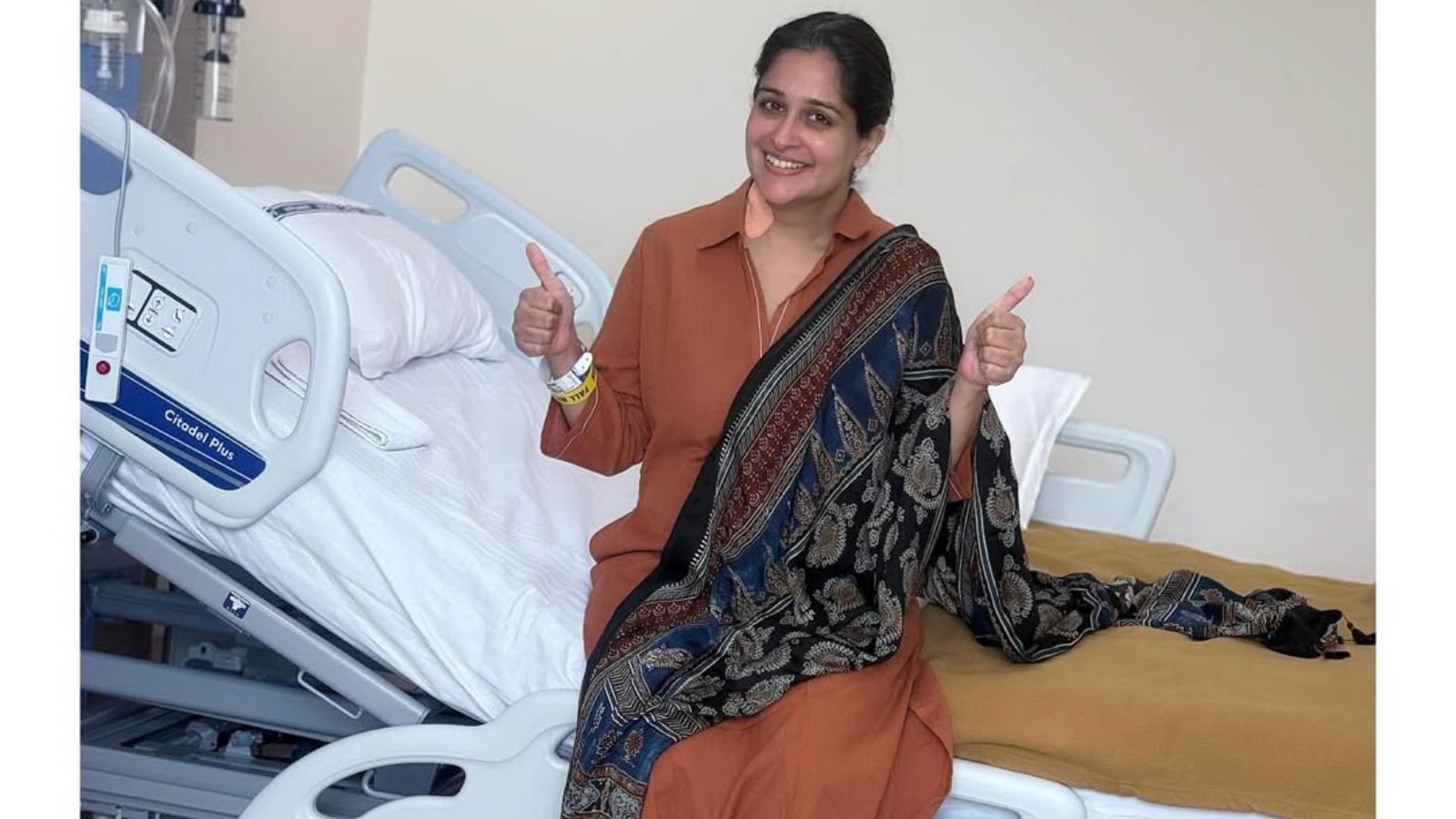
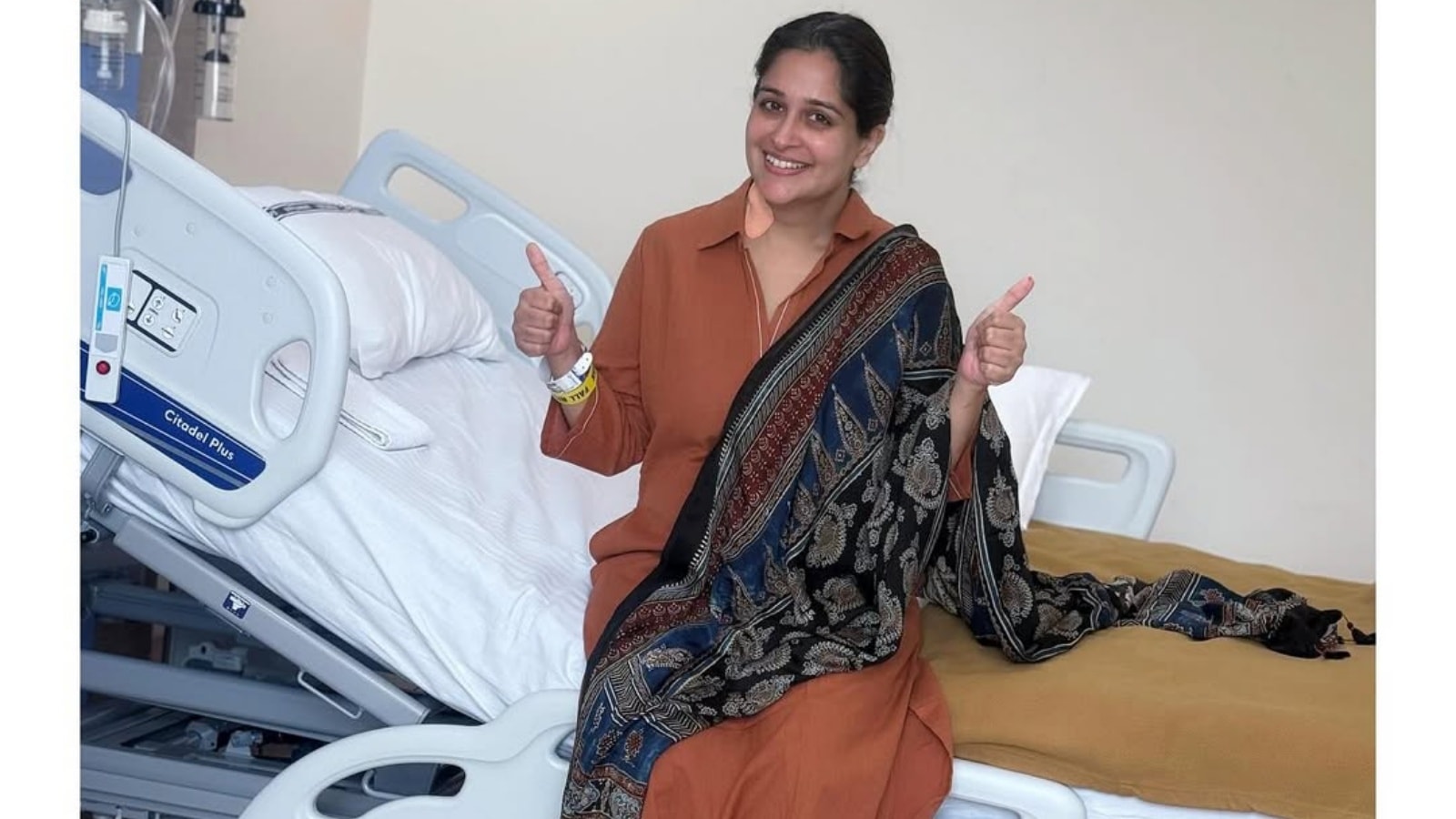
Television actor Dipika Kakar, who recently completed treatment for liver cancer, encountered another health scare when doctors detected a 13mm cyst in her stomach, requiring hospitalisation and surgery. Throughout this phase, her husband, Shoaib Ibrahim, kept well-wishers informed by sharing regular updates on his YouTube vlogs, documenting her journey from hospital to home.
In a recent vlog shared after Dipika’s discharge post-cyst removal, the couple was seen engaging in light-hearted banter. Noticing her walking around at home, Shoaib said, “Mai bol raha hu aaram karlo, par ye aaram kar nahi rahi hai, chalna firna kam karo baith jao (I am telling her to rest but she isn’t; limit walking and sit),” expressing concern that she might be exerting herself too soon.
Dipika, however, calmly explained her stance. “Aisa nahi hai ki mai subah se chal rahi hun, mai subah se soyi thi. Thoda toh movement doctor bhi bolta hai. Dheere dheere chal rahi hun, jitna ho raha hai utna chal rahi hun. Aur thoda chalungi toh woh muscle bhi khulegi. (It’s not that I’ve been walking since morning—I was sleeping since morning. The doctor also says a little movement is necessary. I’m walking slowly, as much as I can. And if I walk a bit more, the muscles will loosen up too.)”
Her words underline a medically backed principle: movement, when done mindfully and with medical clearance, is integral to recovery.
Why gentle movement matters after major abdominal surgery
According to Dr Tapan Singh Chauhan, Senior Consultant, Surgical Oncology, Robotics, GI & HPB, Gynae & Peritoneal Surface Oncology at Artemis Hospitals, gentle mobilisation after surgeries such as liver cancer treatment or cyst removal plays a crucial role in healing.
“Slow, supervised walking helps prevent stiffness in joints and tightness in muscles. More importantly, it lowers the risk of blood clots—a known post-surgical complication—improves lung expansion, and reduces the likelihood of chest infections. Movement also supports gradual muscle strengthening and overall functional recovery,” Dr Singh explains.
Dr (Brig.) Anil Kumar Dhar, Clinical Director and Head, Medical Oncology at Marengo Asia Hospitals, Gurgaon, adds that gentle leg movement is especially important to prevent clot-related complications. However, he emphasises that any physical activity should only begin after the surgeon’s approval.
Story continues below this ad
Is complete bed rest helpful?
Families often instinctively advise patients to avoid movement altogether. Shoaib’s concern — “Aaram karlo…” — reflects a common belief that strict bed rest speeds healing.
But Dr Singh says that prolonged immobility can actually delay recovery. Extended bed rest can weaken muscles, slow blood circulation, increase clot risk, worsen constipation, and even affect appetite and mood. Doctors now recommend early but controlled mobilisation because it keeps blood flow and muscle activity at safe, healing-supportive levels.
Striking the right balance
Dipika clarified she was not overexerting, but doing “jitna ho raha hai utna” — only as much as she comfortably could. That balance, experts say, is key.
“Patients are advised to start with short, slow walks as guided by their surgeon. Mild fatigue is expected, but sharp pain, dizziness, shortness of breath, or wound discomfort are warning signs to stop immediately. Gradually increasing activity—instead of pushing too hard too soon—ensures safer, steadier recovery,” adds Dr Singh.
Story continues below this ad
He further notes that recovery balance can be gauged by avoiding negative physical signs while slowly improving stamina. Movement should complement rest, not replace it.
How walking supports healing
From a physiological perspective, light walking offers multiple benefits, explains Dr Dhar:
1) Improves blood circulation, delivering oxygen and nutrients to healing tissues
2) Activates core and leg muscles, preventing weakness
3) Stimulates bowel movement, reducing post-surgery gas and constipation
4) Enhances lung expansion, lowering infection risk
5) Pumps muscles to help clear lactic acid, improving tiredness and appetite
Story continues below this ad
The gentle movement also boosts mental health. Walking releases endorphins, helping reduce anxiety and promote a sense of well-being—an often overlooked but vital aspect of cancer and post-surgical recovery, he adds.
DISCLAIMER: This article is based on information from the public domain and/or the experts we spoke to. Always consult your health practitioner before starting any routine.

Leave a Reply