
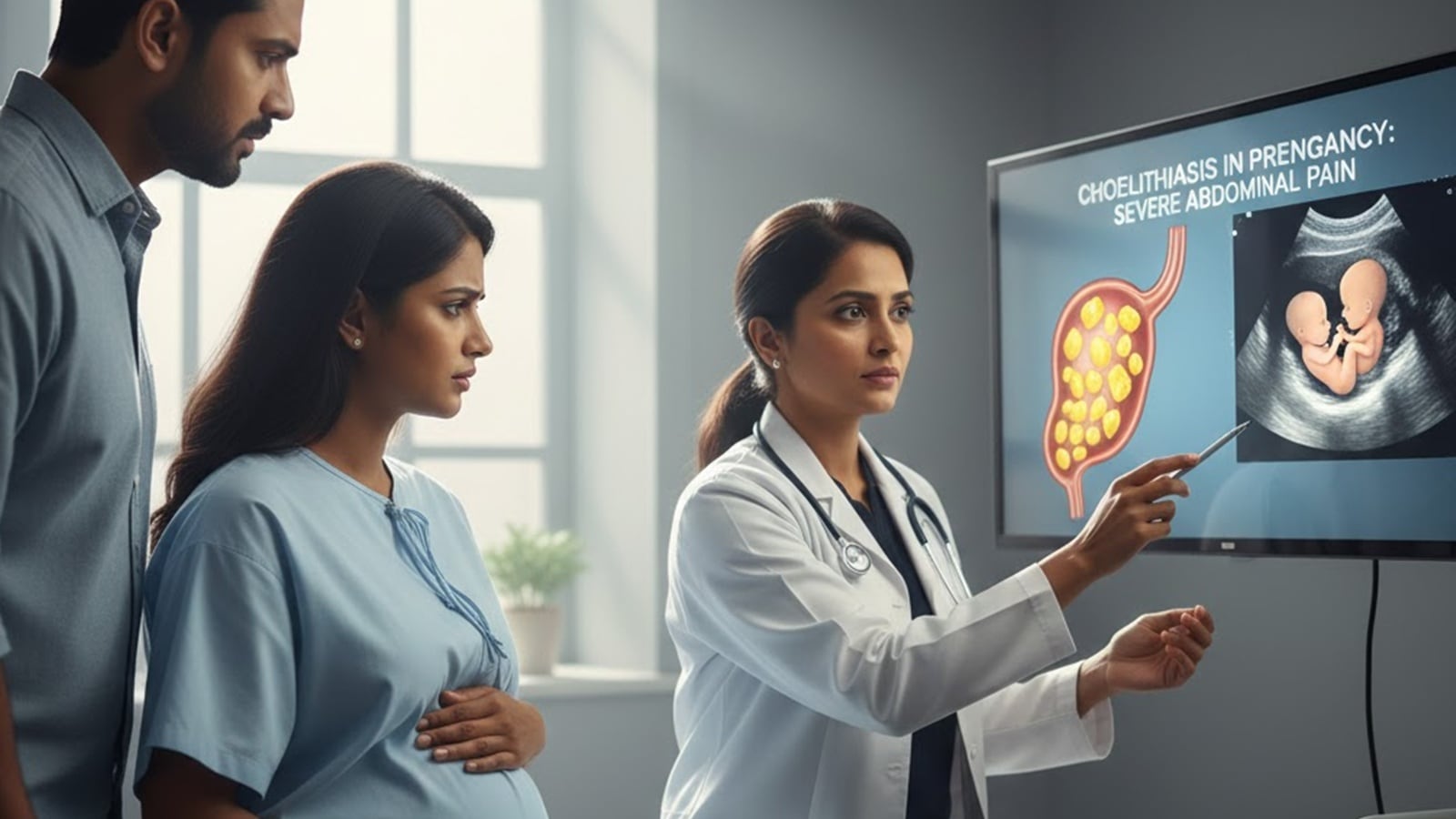
A close friend of mine was diagnosed with gallbladder stones during her pregnancy. While she dealt with intermittent abdominal pain, she had to manage the symptoms during the pregnancy months and after delivery.
Not long ago, Drishyam actor Ishita Dutta spoke about how gallbladder removal surgery after delivery indirectly contributed to her postpartum weight loss.
A 33-year-old Jaipur-based patient recalled how she initially thought the pain was just pregnancy-related acidity or normal post-delivery discomfort. “The episodes would come with a sudden, sharp pain in the upper abdomen, sometimes radiating to my back. It was only after the repeated attacks that an ultrasound revealed gallstones. I was also shocked to learn that pregnancy hormones can slow bile flow and increase the risk,” she said.
Another 31-year-old was advised to undergo a scan after experiencing “a lot of stomach pain” during pregnancy last year. “No surgery was needed as it was managed through a no-oil diet,” she shared.
These are not just isolated cases. Experts say the incidence of gallbladder stones has “definitely increased” in recent times. “Approximately, we do get around 1-2 cases in two months compared to one before during the same period of time. More than during pregnancy, the symptoms increase after delivery. So, most of the time, diagnosis happens soon after delivery when the woman starts getting excruciating upper abdomen pain or nausea, or fever due to an underlying infection of the gallbladder. In that case, when sonography is done, gallbladder stones are often diagnosed,” Dr Preethika Shetty, consultant obstetrician and gynaecologist, Motherhood Hospitals, Kharadi, told indianexpress.com.
The gallbladder is a small, pear-shaped organ that sits just beneath the liver on the right side of the abdomen. Its main job is to store and concentrate bile, a digestive fluid made by the liver. “When we eat, especially fatty foods, the gallbladder releases bile into the small intestine. This helps break down fats so the body can absorb nutrients more easily. While it plays a supportive role in digestion, it is not considered a vital organ,” said Dr Sanjay Sonar, consultant advanced laparoscopy surgeon and abdominal wall reconstruction surgeon, Wockhardt Hospitals, Mumbai Central.
 What causes gallbladder issues? (Photo: AI Generated)
According to the International Journal of Medical and Pharmaceutical Research’s (IJMPR) October 2025 study, cholelithiasis or the presence of gallstones within the gallbladder “is a prevalent and clinically relevant condition during pregnancy and the postpartum period, representing one of the leading non-obstetric causes of hospitalisation among women in this phase”.
Story continues below this ad
Dr Priya Gupta, senior consultant, obstetrics and gynaecology, Cocoon Hospital, Jaipur, said 8 to 12 per cent of pregnant women may develop gallstones, though only a fraction become symptomatic.
Causes and symptoms
Gallstones develop when the components of bile become imbalanced. Bile contains cholesterol, bile salts, and other substances. If there is too much cholesterol or not enough bile salts, the excess material can slowly crystallise and form stones, said Dr Sonar.
Dr Richa Bharadwaj, a consultant obstetrician and gynaecologist at Wockhardt Hospitals, Mumbai Central, noted that women with a higher BMI are at a greater risk. While in many cases, the gallstones are asymptomatic and detected incidentally on sonography, some patients present with symptoms like pain in the upper abdomen, nausea, vomiting, acidity, and indigestion.
Hormonal changes and metabolic shifts during pregnancy are key contributors. Dr Gupta indicated that pregnancy mainly increases the risk of gallstone formation due to elevated levels of oestrogen and progesterone, which slow gallbladder emptying and alter bile composition as well.
Story continues below this ad
“They are more common than many women realise. Pregnancy causes hormonal changes that increase the risk of gallstones. Higher oestrogen levels make bile richer in cholesterol, while progesterone slows down how quickly the gallbladder empties. When bile remains in the gallbladder longer, stones are more likely to form. Many women develop ‘biliary sludge’ or small stones during pregnancy, and some continue to have symptoms after childbirth,” elucidated Dr Bharadwaj.
According to Dr Sonar, “30 per cent pregnant women have gallstones because the hormones that cause relaxation of the uterus so that the baby can grow inside the uterus also relax the gallbladder muscles. This results in improper emptying of the gallbladder, resulting in gallstones,” elucidated Dr Sonar.
The main symptom is sharp pain in the upper right abdomen, which may spread to the back or right shoulder. “This pain often occurs after eating heavy or fatty meals. Nausea, vomiting, bloating, or indigestion that doesn’t improve with usual treatments should be taken seriously. Fever or ongoing pain may indicate complications like infection or pancreatitis, and needs immediate medical attention,” Dr Bharadwaj added.
Rapid changes in weight during the postpartum period can further increase the risk. “Persistent abdominal pain, nausea beyond typical morning sickness, vomiting, or fever should never be ignored during pregnancy,” said Dr Gupta.
Can gallstones affect the baby during pregnancy?
Story continues below this ad
Most uncomplicated gallstones do not directly affect the baby, said Dr Bharadwaj. “However, severe infection or inflammation in the mother can raise health risks. That’s why prompt diagnosis and monitoring are essential,” she asserted.
Early diagnosis and treatment
Early ultrasound diagnosis and careful monitoring help prevent emergency complications, said Dr Gupta. Early diagnosis and coordinated care between her gynaecologist and her surgeon is what helped the 33-year-old patient. “I always wish more women knew that persistent abdominal pain during or after pregnancy shouldn’t be ignored,” she said.
Early ultrasound diagnosis also allows timely monitoring and intervention. “With proper multidisciplinary coordination between gynaecologists and surgeons, most cases can be managed safely without compromising maternal or foetal health,” said Dr Gupta.
Ongoing upper abdominal pain during or after pregnancy should not be brushed off as “just acidity.” Early evaluation can prevent complications and ensure both the mother’s safety and a smoother recovery after childbirth, Dr Bharadwaj said.
How are gallstones managed in pregnant women?
Story continues below this ad
If symptoms are mild, doctors typically suggest changes in diet, including smaller, low-fat meals and staying well-hydrated, said Dr Bharadwaj. “Pain episodes are managed conservatively if possible. If surgery is needed due to repeated attacks or complications, the second trimester is considered the safest time for the procedure,” she added.
According to the IJMPR study, protective factors included Vitamin C supplementation, iron supplementation, regular physical activity, and coffee consumption.
Is surgery common during pregnancy?
Not usually, clarified Dr Bharadwaj. “Many cases are handled until after delivery. However, postponing treatment in women with ongoing attacks can lead to multiple hospital visits after childbirth,” she said.
“In both asymptomatic and symptomatic types of cases, patients are given symptomatic management and Ursodeoxycholic acid medication to dissolve the stones. Surgery for them is planned approximately 3-4 months post-delivery,” said Dr Bharadwaj.
Story continues below this ad
The IJMPR study noted that the majority of affected women (81 per cent) undergo laparoscopic cholecystectomy, “highlighting its safety and preference in peripartum management”.
Gallbladder removal, commonly done through laparoscopic surgery, is a routine and safe procedure, asserted Dr Sonar. “The liver continues to produce bile, but instead of being stored, it flows directly into the intestine. Most people digest food normally and return to regular diets after recovery. A small number may notice temporary bloating or loose motions, particularly after heavy or fatty meals, but this usually settles over time. In the long run, people can lead completely healthy lives without a gallbladder,” said Dr Sonar.
Chances of recurrence
If not treated during the first pregnancy, there is a 30 to 40 per cent chance that similar symptoms can recur in future pregnancies owing to hormonal changes, dietary factors and obesity, said Dr Shetty.
Dr Padma Srivastava, senior consultant obstetrician and gynaecologist at Motherhood Hospitals, Lullanagar, Pune, affirmed that there is no other treatment for gallbladder stones apart from surgery. “But they can lie quiet or sometimes cause no problems at all,” she said.
Story continues below this ad
DISCLAIMER: This article is based on information from the public domain and/or the experts we spoke to. Always consult your health practitioner before starting any routine.

Leave a Reply