

In recent years, a growing number of office-going adults, from young tech workers to desk-bound professionals across sectors, are being told they have a fatty liver. This diagnosis used to be linked mainly with older adults or people who drank alcohol excessively. Today, many non-drinkers in their 20s, 30s and 40s are being diagnosed with non-alcoholic fatty liver disease (NAFLD), now called metabolic dysfunction-associated steatotic liver disease (MASLD). This shift reflects deep changes in how people live, eat, work and move.
Why fatty liver is becoming common in office workers
Office culture often means long hours sitting, high stress, skipped meals and easy access to sugary or processed snacks. These habits can quietly trigger fat buildup in liver cells, even if a person does not drink alcohol at all. This is what doctors call NAFLD or MASLD, where fat accumulates in the liver due to metabolic issues rather than alcohol.Several large studies confirm this pattern. A detailed research paper published in Scientific Reports found that a high number of information technology employees in India, many of whom spend hours each day sitting at a desk, were diagnosed with MASLD. The study revealed that over 84% of these workers had increased liver fat, and many also had other risk factors such as obesity, high LDL cholesterol, and poor sleep.This isn’t just an isolated observation. A study from Clinical and Molecular Hepatology shows that globally, NAFLD affects roughly one in three adults, and the rate is rising steadily as sedentary lifestyles and obesity increase.Dr Varun Bansal, senior consultant cardiac surgeon at Indraprastha Apollo Hospitals said, “The increasing number of people being diagnosed with fatty liver disease among office-going individuals is a cause for grave concern. Fatty liver disease is inextricably associated with insulin resistance, obesity, hypertension, and high cholesterol levels, which are all significant risk factors for heart disease.”

Why fatty liver is becoming common in office workers
How work culture feeds the problem
Office jobs often involve:Prolonged sitting: People can spend 7-9 hours (or more) at a desk every day. Sitting that long slows metabolism, encourages fat storage, and increases insulin resistance, a key driver of fatty liver.Irregular meals and stress eating: Tight deadlines and busy schedules often lead to skipped breakfasts or junk meals. High sugar intake and refined carbs push calories into liver fat stores.Sleep disruption and long hours: Poor sleep patterns and extended work shifts further disrupt metabolic balance and can inch the body towards insulin resistance, a risk factor for MASLD.In short, office life blends inactivity, poor diet and stress, a perfect storm for metabolic disease.To this Dr Bansal added, “Prolonged periods of sedentary work, lack of physical activity, work-related stress, poor sleep habits, and the consumption of high amounts of refined carbohydrates and unhealthy fats are all factors that contribute to both fatty deposits in the liver and cardiovascular problems.”
What experts are saying
Doctors don’t hesitate to call NAFLD a silent disease because people may feel “fine” while liver fat and metabolic damage build up. In its early stages, symptoms are subtle, fatigue, heaviness after meals, slight abdominal discomfort, and easy to miss. That silence can make the disease seem “harmless” until it advances to inflammation, fibrosis or more serious liver damage.One global analysis notes that while liver fat once mainly affected older adults, its prevalence has increased sharply worldwide, making early screening and lifestyle intervention essential for working populations.Dr Bansal explained, “The fact is that most people are not aware of the fact that fatty liver disease is more than just a liver problem, as it is a significant risk factor for heart attacks and strokes. In fact, cardiovascular disease is still the leading cause of death among patients suffering from fatty liver disease.”
Why it’s not just about the liver
A fatty liver is a marker of deeper metabolic imbalance. When the liver stores too much fat, the body’s ability to manage blood sugar, cholesterol and inflammation changes. These shifts increase the risk of various other damaging diseases like, type 2 diabetes, high blood pressure, cardiovascular disease and even chronic kidney diseaseIn other words, NAFLD goes hand in hand with broader health risks that sit behind many chronic diseases today.
A fatty liver is a marker of deeper metabolic imbalance
What could break the pattern
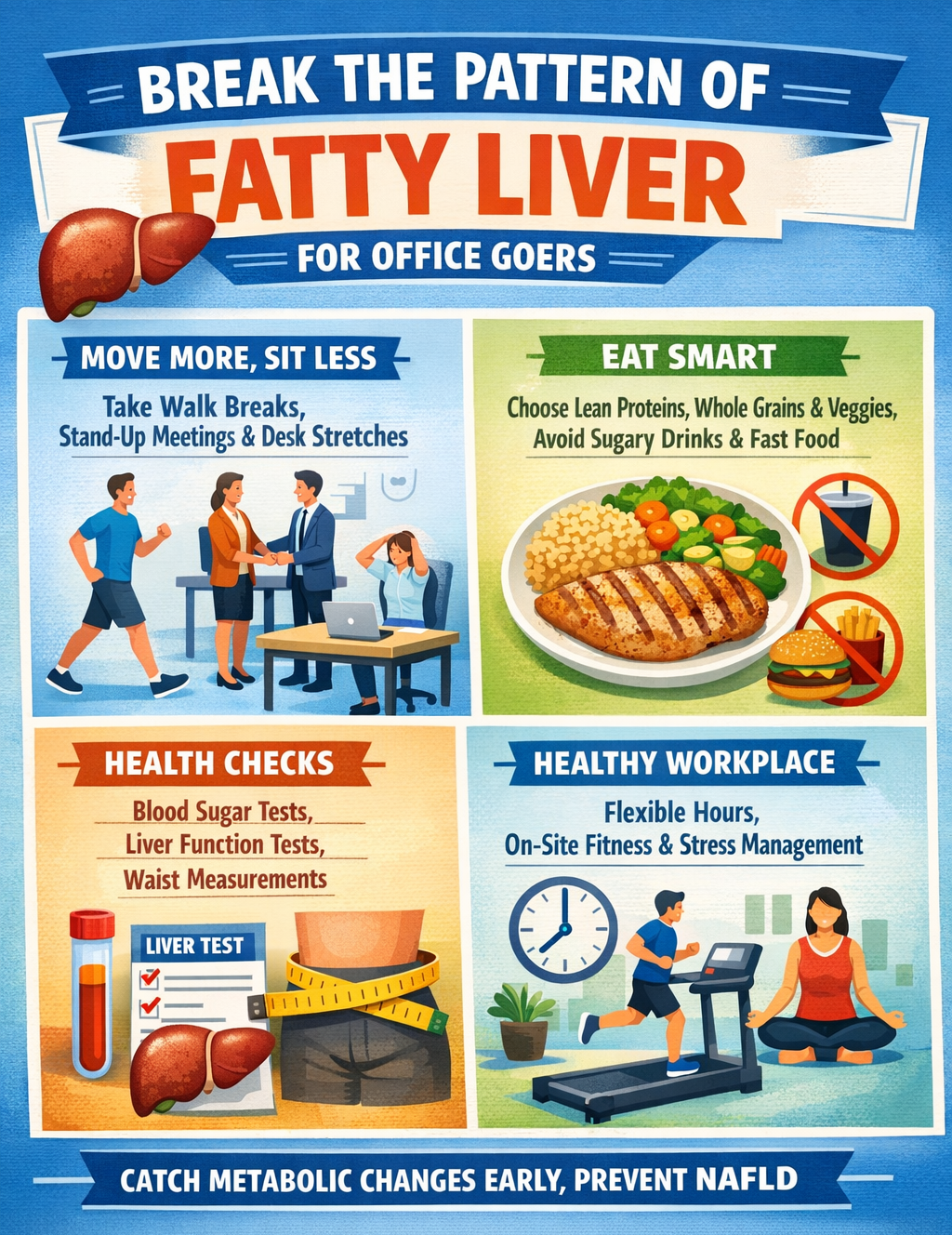
- Long periods of sitting can be divided into brief walks, standing meetings, or easy desk stretches to improve the metabolic system.
- Liver fat accumulation can be decreased by choosing meals high in lean protein, healthy grains, and vegetables over sugary beverages and fast food.
- Annual blood sugar checks, liver function testing, and waist measurements can be helpful in identifying changes in metabolism early on before any major damage is done.
- Workplaces that champion flexible hours, on-site fitness, and stress management help reduce the unhealthy patterns that fuel NAFLD.
As American author and physician Atul Gawande once said, “Better is possible. It does not take genius. It takes diligence.” Careful daily habits can slow or even reverse the early stages of fatty liver disease.Medical experts consulted This article includes expert inputs shared with TOI Health by: Dr Varun Bansal, senior consultant cardiac surgeon at Indraprastha Apollo HospitalsInputs were used to explain why so many office-goers are being told they have fatty liver – highlighting how sedentary lifestyles, poor diet, and metabolic risk factors contribute to this silent condition and why regular health check-ups and lifestyle changes are important.

Leave a Reply