

 India’s fitness sector has seen several operating models over the past decade, from traditional gym chains to instructor-led boutique formats and digital fitness platforms. But Bhatia argues that timing and structural constraints have played a larger role in shaping outcomes than demand itself.
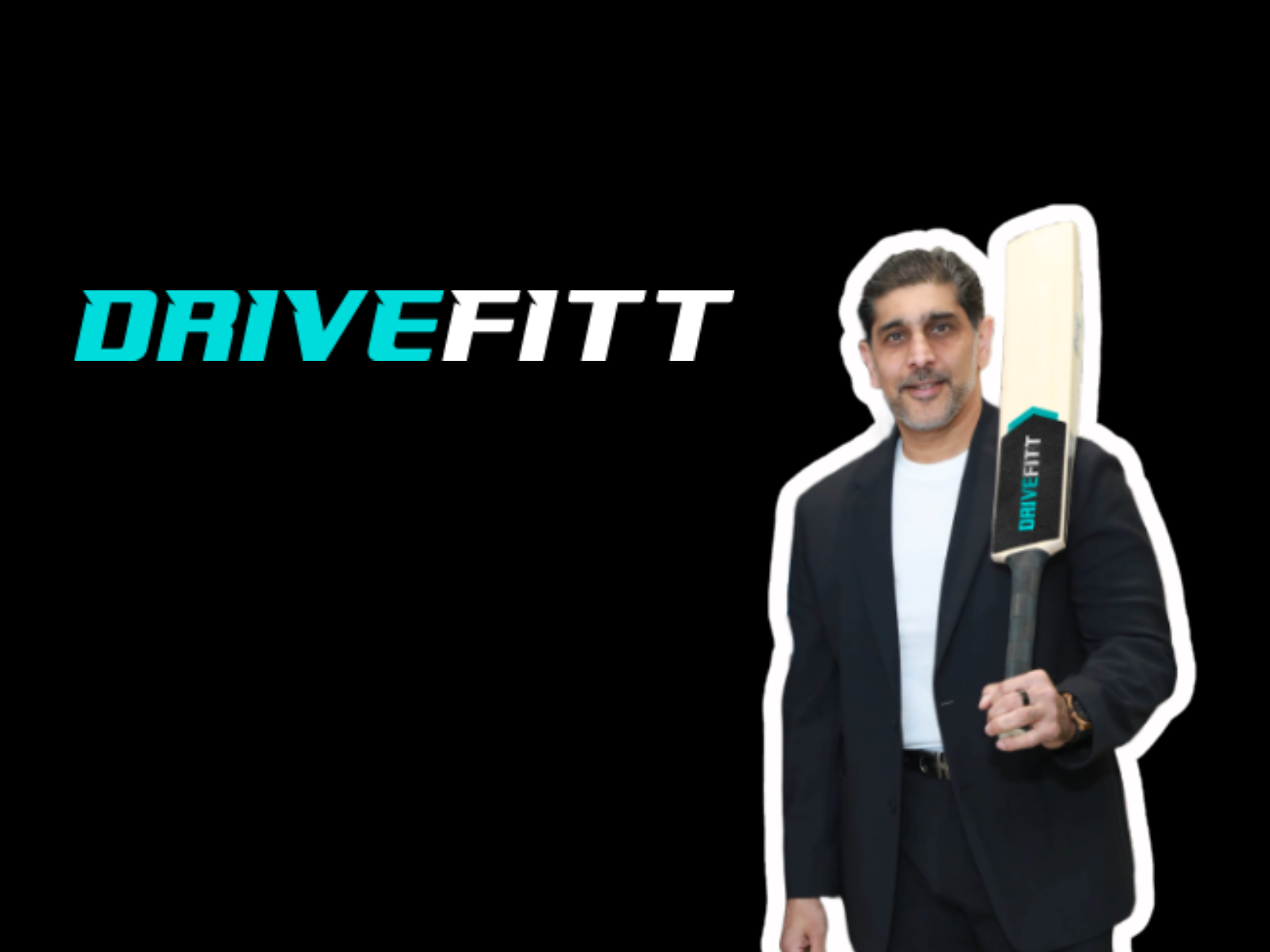
On a busy stretch in Gurugram, workers are putting the finishing touches on a 26,000 sq. ft. facility that signals a shift in how fitness is being packaged for urban India. There are cricket nets, strength and conditioning stations and recovery zones being readied side by side, offering an early look at what Vikram Aditya Bhatia believes could define the next phase of the country’s fitness market.The facility is the flagship of DriveFITT, a member-based sports club that combines cricket training, indoor running, strength work and guided recovery within a single format. The company is targeting consumers moving beyond basic gym access toward structured, outcome-driven fitness.
“We’re not in that space of having to educate people about the benefits of having an active lifestyle. Now it’s about whether the business has what I’m looking for or what I need,” co-founder and CEO Bhatia told ETEntrepreneur.
Bhatia has over three decades of experience in the industry across India and overseas markets. As former managing director of Fitness First India, a chain of gyms and fitness centres, he oversaw the expansion to 15 facilities and more than 65,000 members.
Market ready, model evolving
India’s fitness sector has seen several operating models over the past decade, from traditional gym chains to instructor-led boutique formats and digital fitness platforms. But Bhatia argues that timing and structural constraints have played a larger role in shaping outcomes than demand itself.
“They started at a point pre-Covid where again they were at that point where they had to educate people about the benefits,” he said, referring to earlier large format fitness plays.
He added that building in the category has historically been complex.
“It’s the only industry or only business where you have to create an entire upstream and downstream capability,” Bhatia said.
Pricing pressure has also affected operators, with Bhatia noting that membership costs have not kept pace with inflation even as operating expenses have risen.
DriveFITT is positioning itself around an infrastructure-led model that integrates multiple services within one location rather than operating as a single format fitness centre.
The third space
At the centre of the company’s thesis is the idea that fitness consumption is shifting toward dedicated engagement environments outside the home.
“We don’t want the app to keep you at home. We need you to come to us,” Bhatia said. “This is the third space. Not at home, not at work.”
The Gurugram facility includes indoor cricket nets, strength and conditioning zones, a coached indoor running studio and a recovery area with physiotherapy support, cold plunge and infrared sauna.
The centre also incorporates performance tracking tools such as 3D body scanning and movement assessments, along with cricket nets equipped with automated video capture and adaptive bowling machines.
Bhatia said the intent is to bring professional grade tools to everyday users. “What we’ve really done is what a professional athlete uses. We’re offering that to the average Joe,” he said.
The model also attempts to address fragmented consumer behaviour where users rely on multiple providers for sport, fitness and recovery.
White collar cricket demand
A key demand driver for the model is the rise of recreational cricket among working professionals in urban centres.
“There’s a lot of white collar cricket,” Bhatia said, pointing to participation data from Gurugram. “On Hudle (a platform that enables users to discover, book, and pay for sports venues) alone, 4,000 people are playing every other day.”
Indoor infrastructure could help address weather and pollution constraints that limit year round play, he added.
“They don’t get to play year round because of pollution, monsoon, heat and winter. They don’t have the ability to play year round. So they will definitely come,” he said, referring to semi-professional and serious amateur players.
DriveFITT is currently following a members-only approach and does not plan to list inventory on aggregation platforms.
“I don’t want to do an inventory business,” Bhatia said. “I can’t give you an experience if I don’t see you often enough.”
Where’s the money?
The company has priced its base membership at about ₹6,000 per month plus taxes, with total monthly spends expected to rise depending on add-on services.
“Beyond your monthly subscription, we have 11 different avenues of earning money,” Bhatia said.
The company expects most members to fall into what he described as the “sweet spot” of roughly ₹8,000 per month in overall spending.
DriveFITT’s immediate focus is Gurugram, where it plans to build density before expanding further.
“The first year and a half is to significantly dominate the Gurugram market,” Bhatia said. The company is targeting about 10,000 families across two to three locations in the city.
Beyond the National Capital Region, DriveFITT is preparing a franchise and licensing framework, with master franchise discussions underway in states such as Punjab and West Bengal. The company is also evaluating entry into Gulf markets including Qatar, Abu Dhabi, Dubai and Riyadh around 2027.
Bhatia said the centre is projected to achieve return on investment in about two and a half to three years.
While venture capital interest in sports and fitness remains tilted toward digital models, he believes infrastructure backed formats will draw more attention over time.
“How much more tech can you develop if there’s no infrastructure to use that tech?”


Leave a Reply