
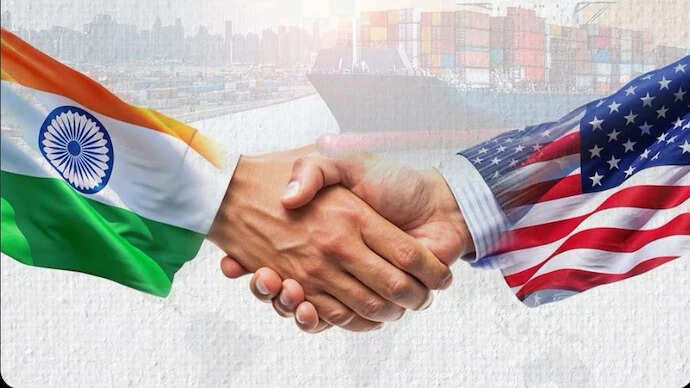
Panipat’s export-driven textile industry is experiencing a revival following a revised trade agreement between India and the United States. This agreement has brought much-needed clarity and relief after months of uncertainty by resetting tariffs on Indian goods to a fixed level. This has eased pressure on exporters and restored confidence among overseas buyers, particularly from the US, which is Panipat’s largest export market.
For much of the previous year, Panipat’s exporters navigated a turbulent trade environment. Repeated tariff changes caused confusion and disrupted long-term contracts. This led to slowed orders, squeezed margins, and weakened buyer sentiment. The impact was evident globally, with reduced participation from US buyers at international textile fairs signaling declining confidence in Indian sourcing.
This uncertainty particularly affected Panipat. The city’s textile ecosystem, which includes handloom, power-loom, home furnishings, and floor coverings, relies heavily on exports. Nearly three-fifths of its export business is linked to the US. Consequently, tariff volatility posed a direct threat to revenue, employment, and capacity utilization.
The new India–US trade arrangement marked a significant turning point. By fixing tariffs at a considerably lower level than what exporters had been facing, the deal eliminated unpredictability in pricing and negotiations. Crucially, it also repositioned Indian exporters competitively against other major textile-producing nations.
With China, Pakistan, and Bangladesh encountering higher tariff barriers, Indian products from Panipat are now more attractively priced in the US market. This relative advantage is already influencing buyer discussions, with exporters reporting renewed inquiries and a cautious optimism from overseas clients.
Leaders within Panipat’s export community have described the agreement as a much-needed reset.
Panipat Exporters Association representatives noted that a fixed tariff structure allows exporters to plan production cycles and pricing with greater confidence.
Members of the Haryana Chamber of Commerce and Industries (Panipat chapter) acknowledged that while the sector still faces the challenge of winning back lost customers, the competitive edge created by the deal significantly improves India’s position.
Industry leaders associated with the Handloom Export Promotion Council highlighted that exporters are entering a recovery phase after an extended period of stagnation.
Across the board, the sentiment is consistent: recovery will not be instantaneous, but the fundamentals have improved decisively.
Panipat’s export economy is substantial, mature, and highly sensitive to global trade policy. With a total annual turnover reaching tens of thousands of crores and exports forming a significant share, even minor shifts in tariff structures have disproportionately large effects. The new agreement is anticipated to improve price competitiveness in the US market. It is also expected to gradually restore buyer confidence and increase order volumes over successive trade cycles. Furthermore, it should stabilize employment across weaving, dyeing, and finishing units.
The city’s robust manufacturing base positions it well to respond swiftly as demand recovers, provided global conditions remain stable.
While the trade deal has clearly alleviated immediate pressures, exporters understand that rebuilding momentum will require time. Relationships that were strained during the period of uncertainty need to be mended. Buyers will also seek consistency before fully scaling up their orders.
Nevertheless, the agreement emphasizes the importance of ongoing bilateral trade dialogue and close collaboration between the government and industry. For Panipat, this represents more than just a tariff reduction; it offers a path back to growth. It reaffirms India’s standing as a dependable textile sourcing destination in an increasingly competitive global marketplace.


Leave a Reply