
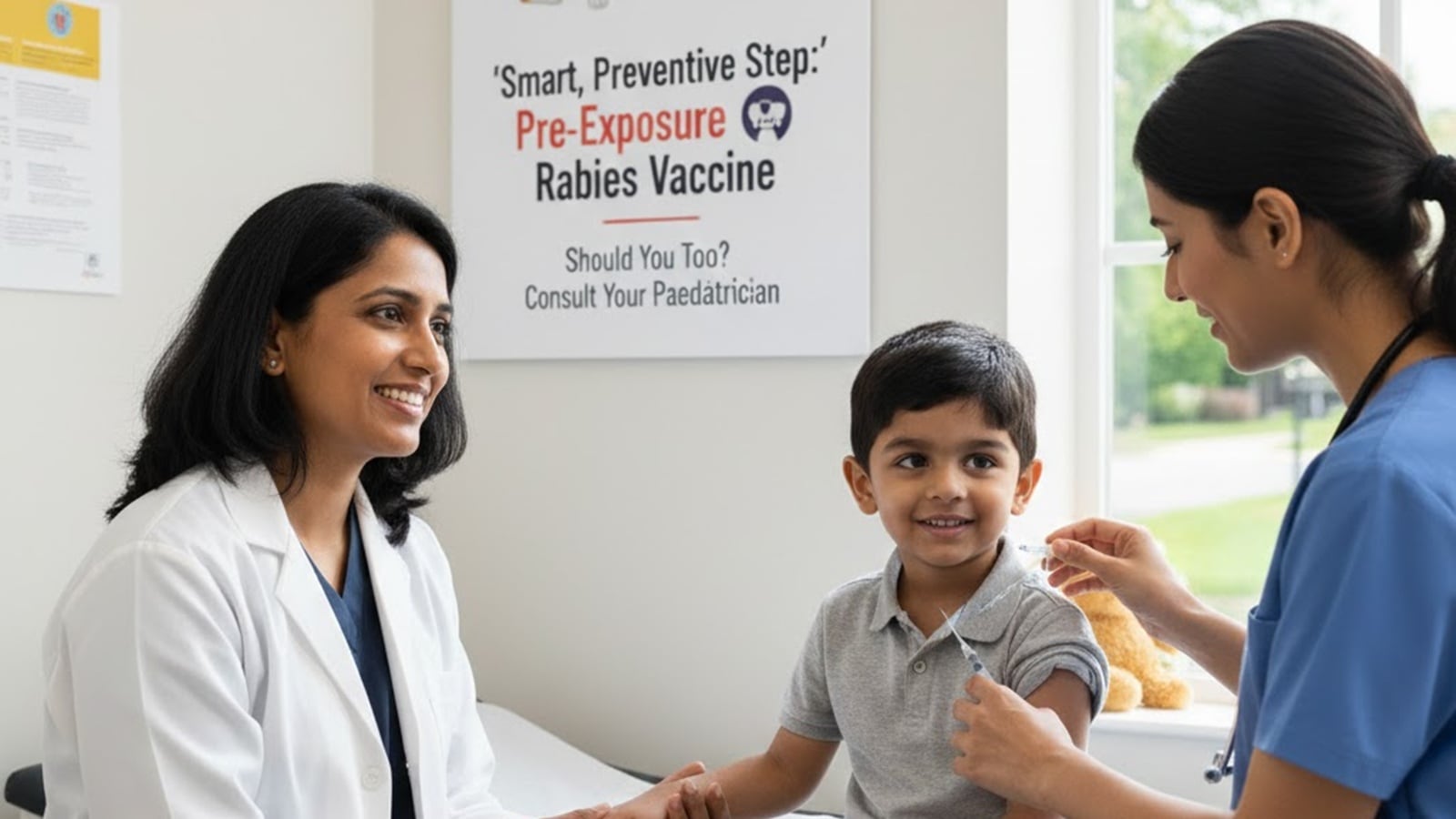
Child specialist Dr Deepa Aggarwal recently gave a pre-exposure anti-rabies shot to her child. Explaining the reason, the paediatrician said that after a rabies pre-exposure prophylaxis, in an emergency situation, you don’t have to panic. “If there is a dog bite and you bleed, along with the anti-rabies vaccine, you need to take the rabies immunoglobulin vaccine too, which is painful and traumatic because it is locally given at the spot where the wound has happened. If a dog bites later, the child doesn’t have to take rabies immunoglobulin vaccine,” she noted in an Instagram post.
Reasoning that the immunoglobin vaccine is “costly,” she continued: “On an average, it is Rs 5000-10000. It is not easily available. Without immunoglobulin, the chances of rabies happening increase.”
According to Dr Aggarwal, if you have already received the rabies vaccine, you only need two booster shots of the rabies vaccine without immunoglobulin. “In an emergency, you don’t have to panic,” she said.
Dr Amar Bhise, consultant – PICU (Paediatric Intensive Care Unit), Neonatology, Paediatrics, Motherhood Hospitals, Lullanagar & Kharadi, Pune concurred that rabies is one of the deadliest infections known, and once symptoms appear, it is almost always fatal, “many doctors are increasingly choosing rabies pre-exposure vaccination for their own children, not out of fear, but out of prevention”.
Dr Vijay Shekhar Janapareddy, senior consultant paediatrician, Ankura Hospitals, Hyderabad, said that avoiding the risk of rabies is a three-pronged strategy. “Vaccination of animals, post-exposure prophylaxis, which is expensive and painful, and pre-exposure prophylaxis, or PrEP, which is a safe, well-studied vaccine schedule that builds early immunity and significantly simplifies treatment if a bite ever occurs.”
Rabies is one of the few diseases where there is no second chance, stressed Dr Jaykishan Tripathi, consultant, pediatric critical care, KIMS Hospitals, Thane. “Once symptoms appear, survival is almost impossible. In a country like India, where children often interact with stray animals during play, waiting for exposure can sometimes mean waiting too long. Preexposure vaccination is a preventive step that cuts down on panic, delays, and risks in case of an unexpected bite or scratch,” said Dr Tripathi.
Notably, many bites go unreported. “Rabies doesn’t always come from serious bites; it can enter through small wounds or licks on broken skin. This makes children particularly vulnerable,” stressed Dr Tripathi.
Story continues below this ad
Pre-exposure vaccination does not replace treatment after a bite, but it makes post-bite care simpler, faster, and more effective, clarified Dr Bhise.
How does pre-exposure vaccination help in real-life emergencies?
It simplifies everything, shared Dr Tripathi. “After exposure, a vaccinated child needs fewer injections and does not require rabies immunoglobulin, which is expensive and not always easy to find. In emergencies late at night, during travel, or in remote locations, this time advantage can be crucial.”
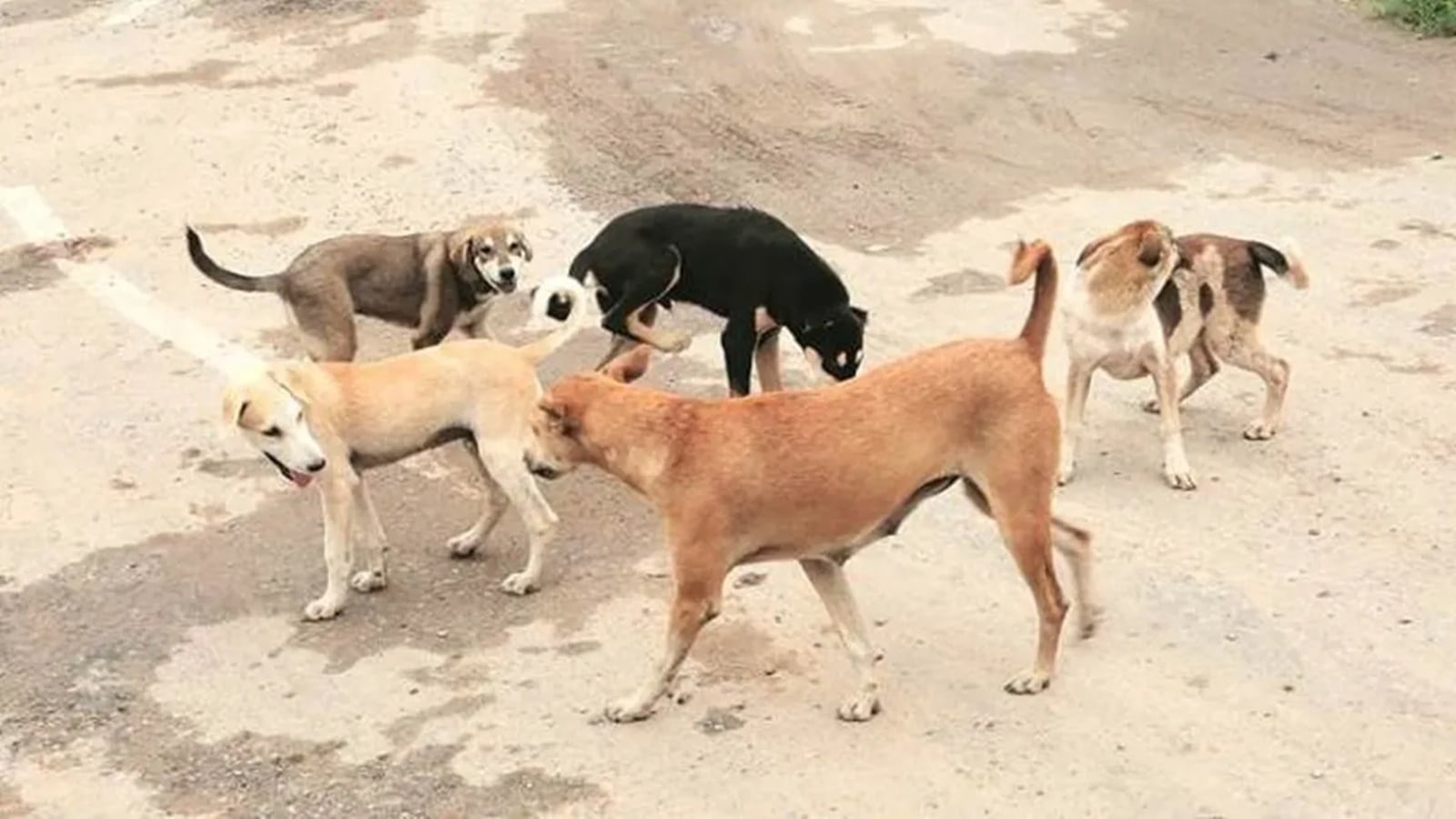 Are there more strays around you? (representative image)
Some parents worry about over-vaccination. Is this concern valid?
Parents should always ask questions, but it’s important to distinguish necessary prevention from unnecessary fear, said Dr Tripathi. “Rabies vaccines used today are safe, well-researched, and widely administered around the world, especially for high-risk groups. This isn’t about adding another routine vaccine; it’s about preparing for a risk that is unpredictable but can be fatal if overlooked.”
Story continues below this ad
Indian Academy of Pediatrics (IAP) recommends a schedule of three doses 0, 7 and 21/28 days, even though WHO recommends a two-dose schedule. “There is a recommendation for a 1-year booster, which changes for people at high risk of exposure to unvaccinated animals,” said Dr Janapareddy.
Should every child receive pre-exposure rabies vaccination?
It’s not mandatory for all children, but it should be strongly considered for those living in areas with many stray animals, children who frequently play outdoors, or families that travel often. It’s a decision that’s best made after discussing the child’s environment and lifestyle with a paediatrician, said Dr Tripathi.
Many paediatricians now view it as a smart preventive step, similar to other routine vaccines, mentioned Dr Bhise. “If your child has frequent animal exposure or you want extra safety against a 100 per cent fatal disease, discuss rabies pre-exposure vaccination with your paediatrician. Prevention, in this case, can truly save lives.”

Leave a Reply