
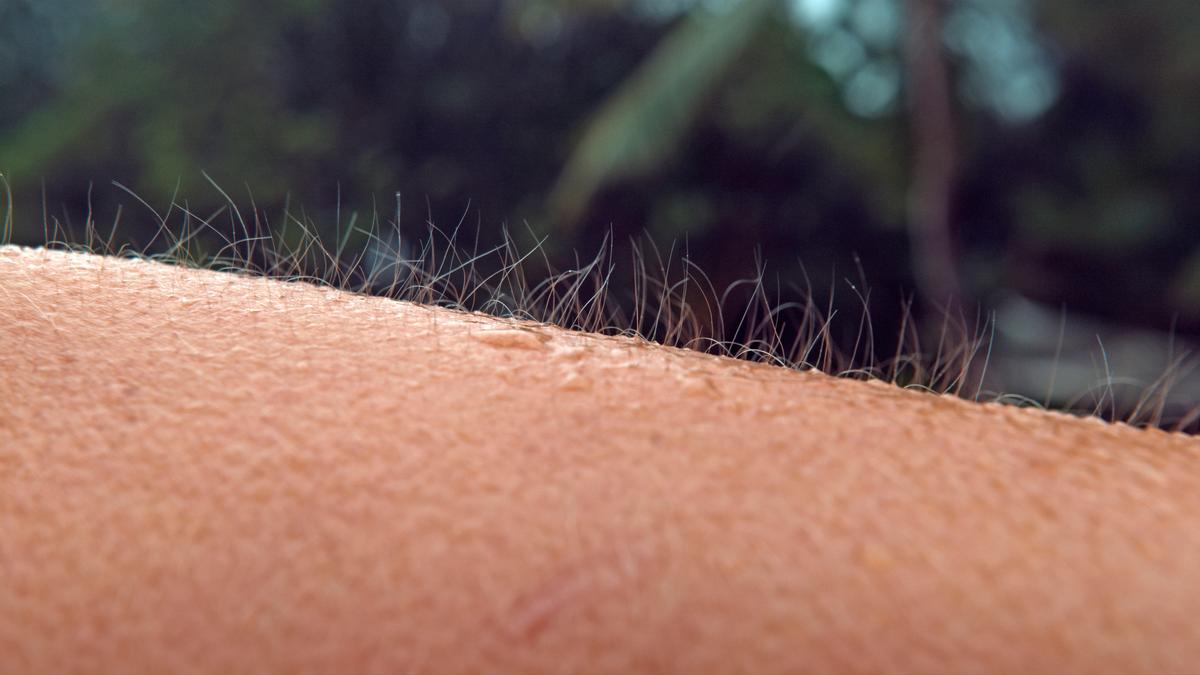
A: Goosebumps, scientifically known as piloerection, occur when tiny muscles called arrector pili contract at the base of hair follicles. This pulls the hairs upright, creating the little harmless bumps on the skin.
The response is controlled by the sympathetic nervous system, a branch of the autonomic nervous system that automatically regulates involuntary bodily reactions. It activates during cold exposure, fear or strong emotions such as awe, excitement, and inspiration.
In furry animals, piloerection has clear functions. Raised hairs trap air to improve insulation in the cold or make the animal appear larger and more threatening to predators. Humans inherited this reflex from hairier ancestors, but with little body hair left, it no longer serves a useful function. It remains as a vestigial trait, meaning a feature inherited from our ancestors that no longer plays an important role in modern humans.
Goosebumps often appear in waves because nerves activate arrector pili muscles in coordinated clusters, sending signals along neighbouring fibres and creating a rippling pattern across the skin rather than isolated bumps.
Goosebumps are usually harmless and rarely indicate health problems, except in uncommon situations such as seizures or drug withdrawal.
S.P. Kirtik Raj is interning with The Hindu.

Leave a Reply