
Sukanya V’s mind is a remarkable network of names, medical conditions and institutions that may be able to help people in utmost need. In one instance, she found a daughter pouring out her heart about the difficulty her father diagnosed with throat cancer faced having to travel from Maraimalai Nagar to the hospital in Tambaram. The family cannot afford to hire a cab for every visit to the hospital. There is another case of a single parent with leukaemia who has got a steep discount in her medicines thanks to Sukanya’s network with doctors and pharmaceutical companies.
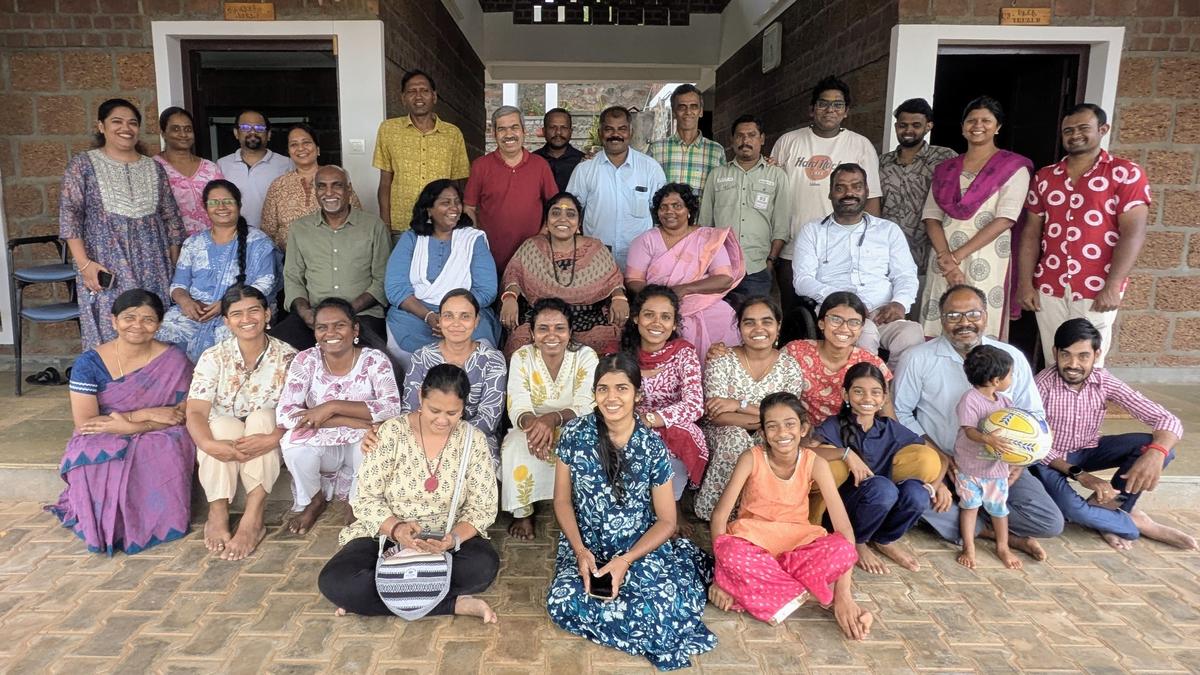
In her early 70s, Sukanya is among the 25 volunteers of DoctorNet India, a non-profit making healthcare accessible to disadvantaged people in Tamil Nadu by bridging the information and empathy gaps. Operating from the comfort of her home in Chennai, she is currently handling eight cases besides being actively involved with other non-profits such as Saaisha India Foundation, Lit the Light and Sneha.
Providing information about the health insurance scheme offered by the State Government, identifying private hospitals that offer surgeries at subsidised rates, connecting patients with healthcare professionals who are ready to give an empathetic ear and following up with patients post a surgery are among tasks taken up by DoctorNet’s team of volunteers.
Lessons from the ground
Started in 2017 by Aravindan R. and wife Abirami D., both residents of Coimbatore who were volunteering with various organisations, they decided to tap into the empathy factor in every human.
During the 2015 Chennai Floods, Aravindan along with a friend were able to mobilise 40 doctors for a week to conduct health camps. Likewise, homemaker Abirami volunteered as a fundraiser with an NGO collecting old newspapers from apartment complexes to raise money for medical treatment, her output increasing by more than 10 times in three years.
These examples were the tipping point for the couple to start a model that could bridge the gaps in healthcare for the underprivileged.
DoctorNet connects with grassroot organisations who refer them families in acute need of medical treatment, care or emotional support to guide them to available schemes or programmes.
Once the beneficiary is brought on board, the person is connected to a volunteer who handholds the person through the pre- and post-operative journey.
“In the last nine years, we have grown the network from a few doctors to 600 of them. And we have helped more than 4,000 people from various districts with our network of volunteers and doctors. At any point in time if we need any advice or guidance, we reach out to them, and our volunteers facilitate this process,” says Aravindan, a software professional who quit his job to work full time for this healthcare non-profit.
Today, they have many doctors who refer them patients who they think need support.
The volunteer leader board
Their first volunteer was Kalpana, a kidney transplant recipient, who was able to touch a chord with other patients undergoing renal issues. She, however, died last year.
Coimbatore has the highest number of volunteers, followed by Chennai, Dharmapuri and Tiruchiarapalli. These volunteers work from the comfort of their home but in some cases assist them by making hospital visits. The age group of the volunteers are also varied – the youngest in the team is an optometrist in her 20s, and the senior most is in her 70s.
Thirty-year-old Vivek Nair from Erode is a beneficiary-turned-volunteer. Having struggled financially and emotionally while undergoing a kidney transplant, today he is an organ donation campaigner. By sharing his personal narrative, he helps break stigma and fights barriers.
“There are umpteen doubts a person with kidney failure has, and they hesitate to ask the doctor. From my own experience, I know how it affected me psychologically, so I talk to them till they are convinced,” says Vivek, who works as a hospital coordinator. The volunteers are orientated to do a host of tasks, like pacify the fears of a patient and speak to the doctor on behalf of a patient.
Abirami recalls a case of a parent of a tribal child who was undergoing surgery in a government hospital wanting an additional bystander to be allowed, as the hospital environment was overwhelming for the mother. “We spoke to the doctor and got this done,” she says, inviting anyone interested in creating a positive social change for the underprivileged to join them.
Abirami says they have collated info of funding support that is available between a private organisation and a private hospital. To provide safe spaces to share experiences and cope with chronic conditions, DoctorNet runs support groups for renal failure patients, cancer patients, the differently abled and alcoholics.
For the couple with no background in medicine, how easy has it been? Both Abirami and Arivandam say they have grown organically over the years, and being with patients is itself a learning experience. The two have also completed a one-year fellowship on community health.
To volunteer and for other details, visit https://www.doctornetindia.org/
Published – October 31, 2026 09:42 pm IST

Leave a Reply